Thus far I have used the following filler rods and fluxes on my projects and suspect they are the most widely used:
BRASS:
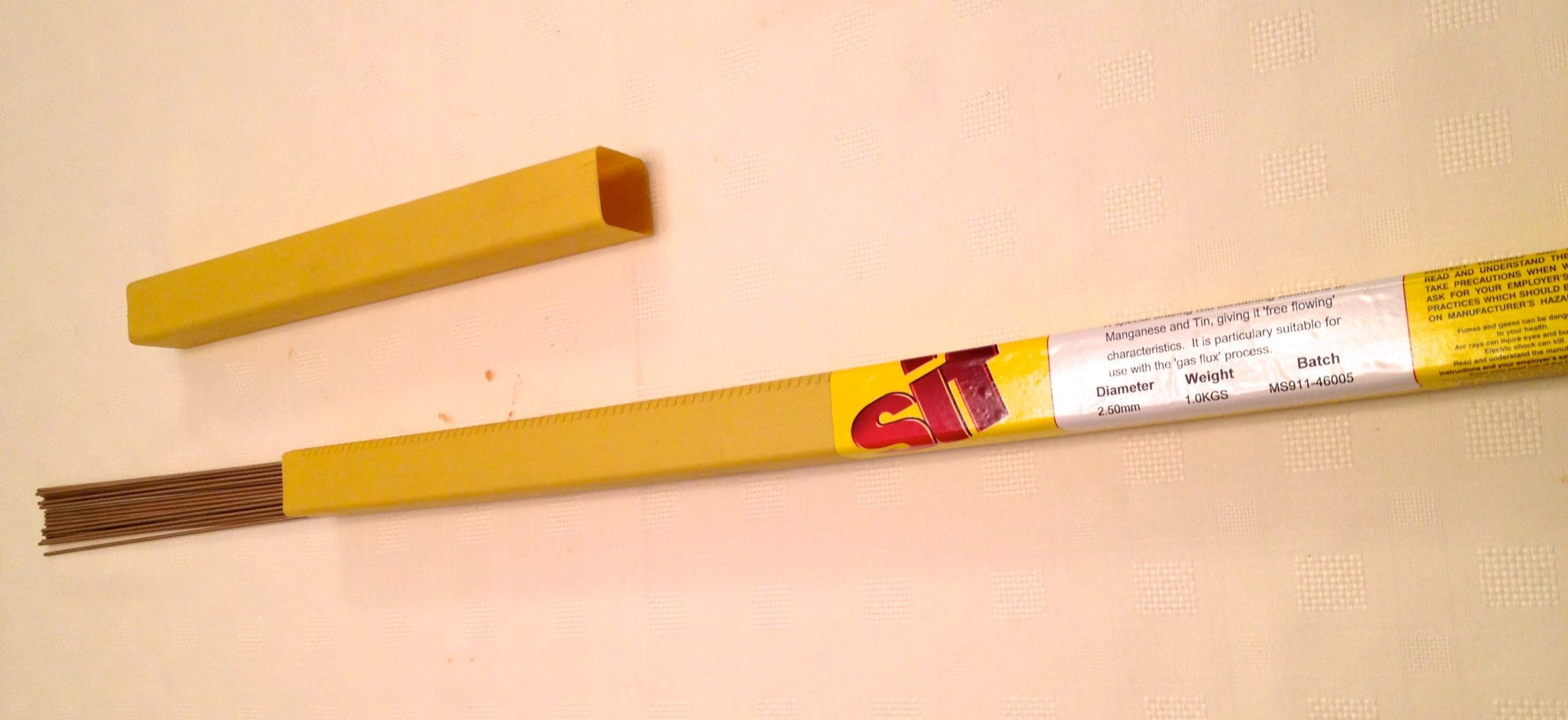
SIF 101, relatively low melting point brass rods in variety of diameters, 1.5, 2, 2.5 and 3mm. For lugs and braze-ons (1.5mm) and Fillet brazing (larger diameters). SIF do their own fluxes but I favour the Cycle Design Low Fuming Bronze which I find much easier to clean off and generally better in use.
See Cycle Design Products at: http://cycledesignusa.com/wp/

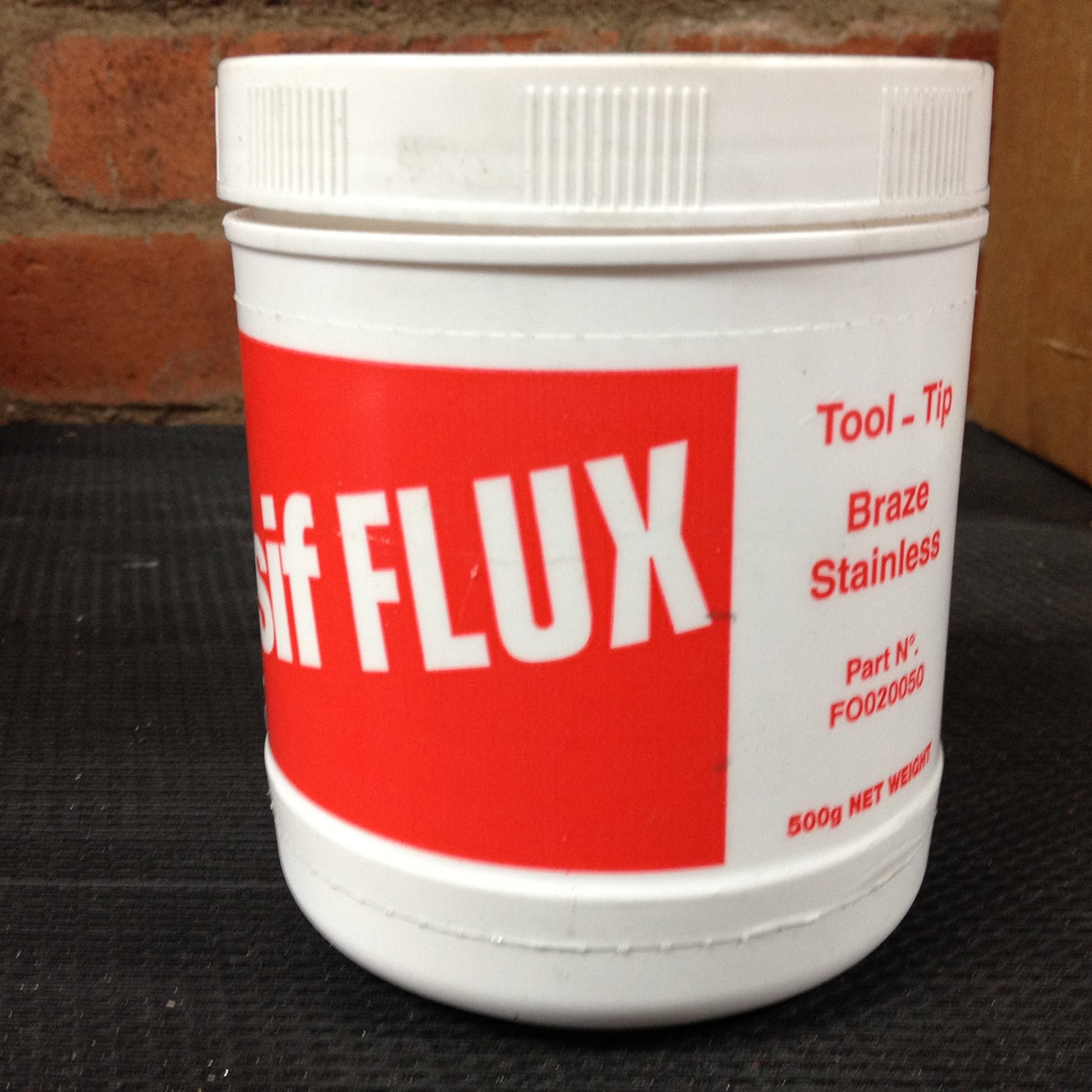
SIF No 2, slightly higher melting point and harder result. I have used this for small fillets and to repair threads, but its main benefit is it can be used to braze stainless steel. Unfortunately in this case it needs to be used with the specific flux viz. Tool Tip/Braze Stainless flux which does not seem to melt as well as other fluxes. That said I have used it to braze a lugged stainless fork crown with no problems. Mine has come as a crystalline substance like sugar and I find grinding it to a powder with a pestle and mortar or hitting it with a hammer in a plastic bag enables mixing a much smoother paste more quickly as otherwise it takes an age to mix. It takes up water only gradually and therefore if used too quickly will harden so I even found leaving it overnight to ensure full water take up was useful. Equally when heated it dries rapidly and has a habit of dropping off the work. I spoke to someone who had used it extensively and he found it was effective used dry, by warming the tubes and covering them in dry flux and also warming the rods and constantly dipping them, the heat enabling the flux to adhere. In fact I have since added the dipping method to complement the initial application of the flux as a paste and can confirm it helps a great deal.
SILVER:
SIF No 43, 55% silver solder in 1.5mm rods, 0.5 metre lengths, for lugs and braze-ons.
In fact there are several other manufacturers of 55% silver rods of similar composition which are likely to be as effective and I have used two other makes since.
CYCLE DESIGN FILLET PRO, Silver solder for fillet “brazing”, also useful for filling gaps such as slotted dropouts. 2.35 mm diameter sold in coils by the troy ounce. 1 troy ounce = 31.1grams, which equates to about 0.78 metres of fillet pro 2.35mm and a little over 1.8 metres of the 1.6mm diameter.
I use both the above solders with the Cycle Design Stainless Light flux which is very smooth to apply and washes off very easily compared to other fluxes I have used. Like all fluxes it comes with health warnings about toxicity and it is the one flux I have used that I would wear an appropriate mask for when fillet brazing because in this situation you use quite a lot of flux and hence a lot of fumes are generated which are pretty acrid. Using it with lugs does not generate as much fume.
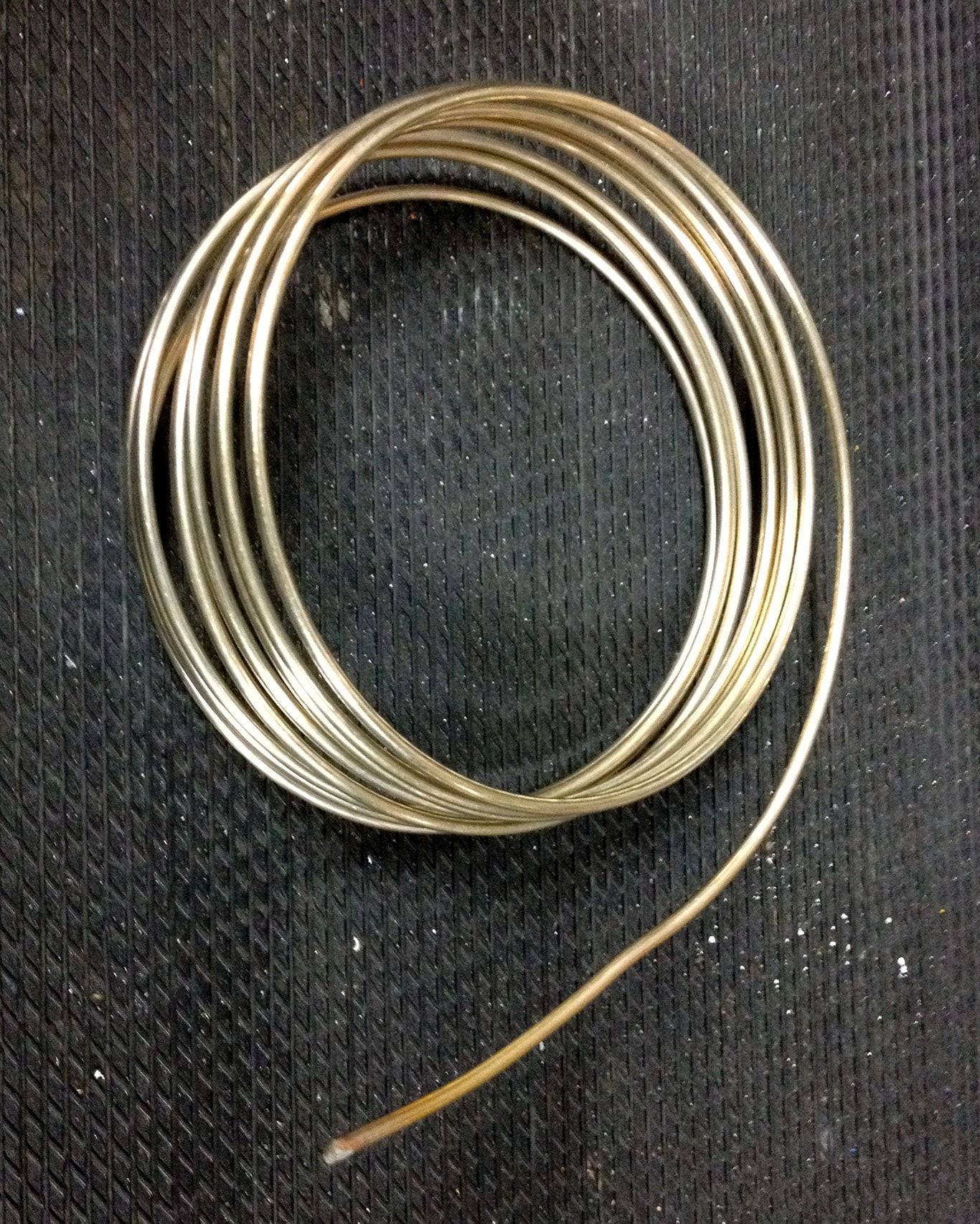

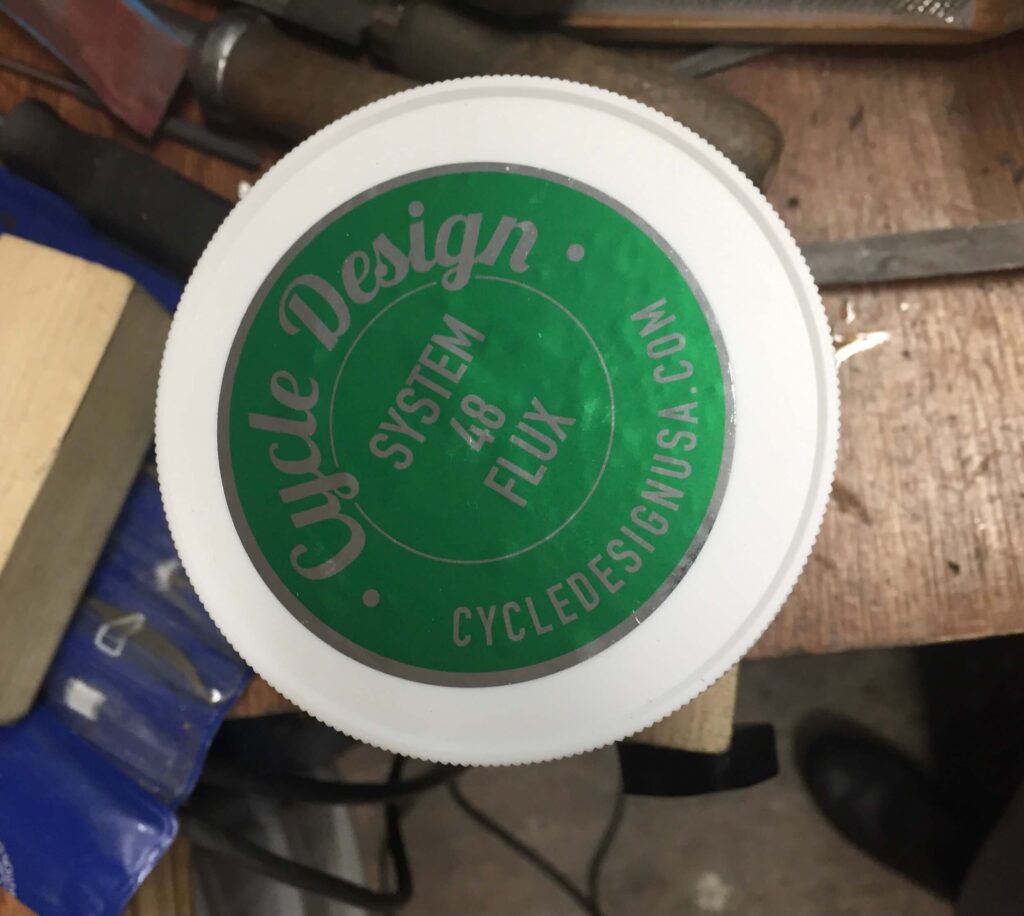
CYCLE DESIGN SYSTEM 48, Said by cycle design themselves to be the ultimate in silver brazing filler, but It is not clear to me how exactly it differs from Fillet pro, as it is priced similarly. Cycle design does not publish the formula of its’ brazing rods. Used with its’ own flux as a “system”. Also available in 1.6 and 2.4 mm diameters, though at present Ceeway is only supplying the 1.6 mm.
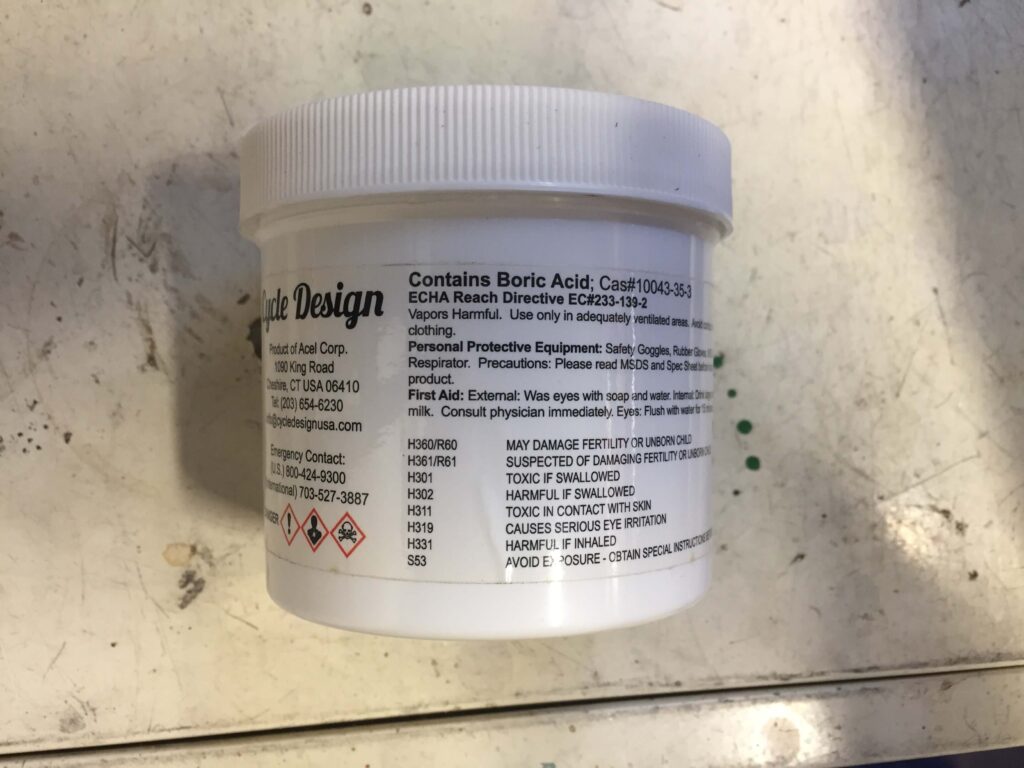
I have not used the system 48 rods but I have used the flux recently as an alternative to Stainless Light, in conjunction with the Fillet Pro. I can confirm the claim that it is easy to wash off after brazing requiring only warm water, though hot works better, and as such is slightly easier than Stainless light to clean up. It is a white as opposed to grey paste and seems less dense. I am not yet sure if it lasts longer than the Stainless Light in use, but still emits foul fumes if you get too close. The instructions , as expected, suggest the wearing of a respirator when brazing.
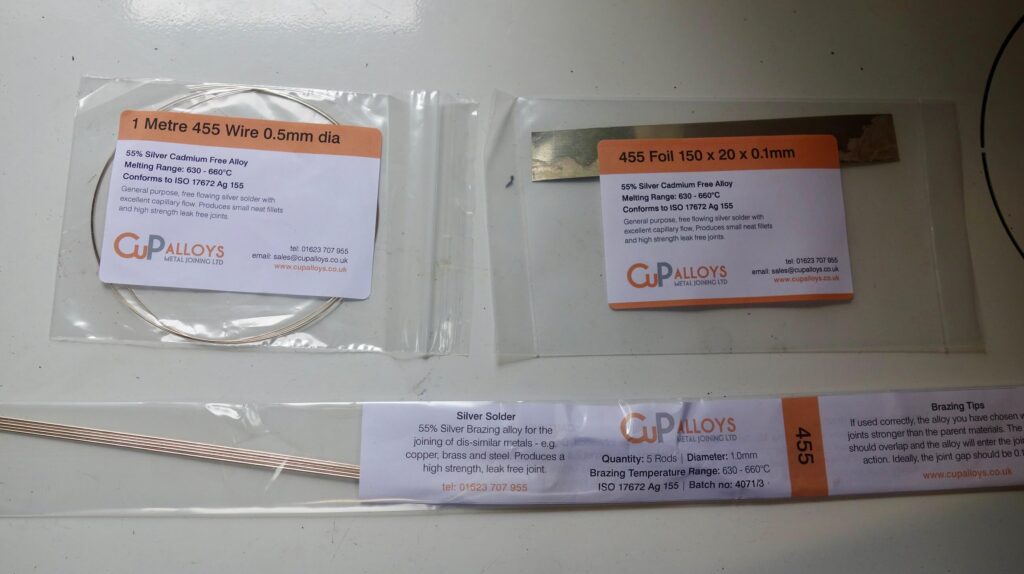
Other Silver Products, I have more recently obtained some other potentially useful products for silver soldering from Cup Alloys. These include 0.1 mm silver foil, which I have mentioned elsewhere, and useful for inside dropouts and joining flat parts. I do not see it as useful for gap filling as it is 55% silver and probably too runny. I also have obtained 0.5 mm and 1 mm silver rod, previously only having been able to find 1.5 or 1.6 mm. Again as 55% silver, though other percentages are available. I hope these will prove especially useful for winding round dropout inserts where they are likely to fit better than the thicker rods.
SNH 6/11/21