

This of course does not include all the tools you need to build a frame up into a bike!
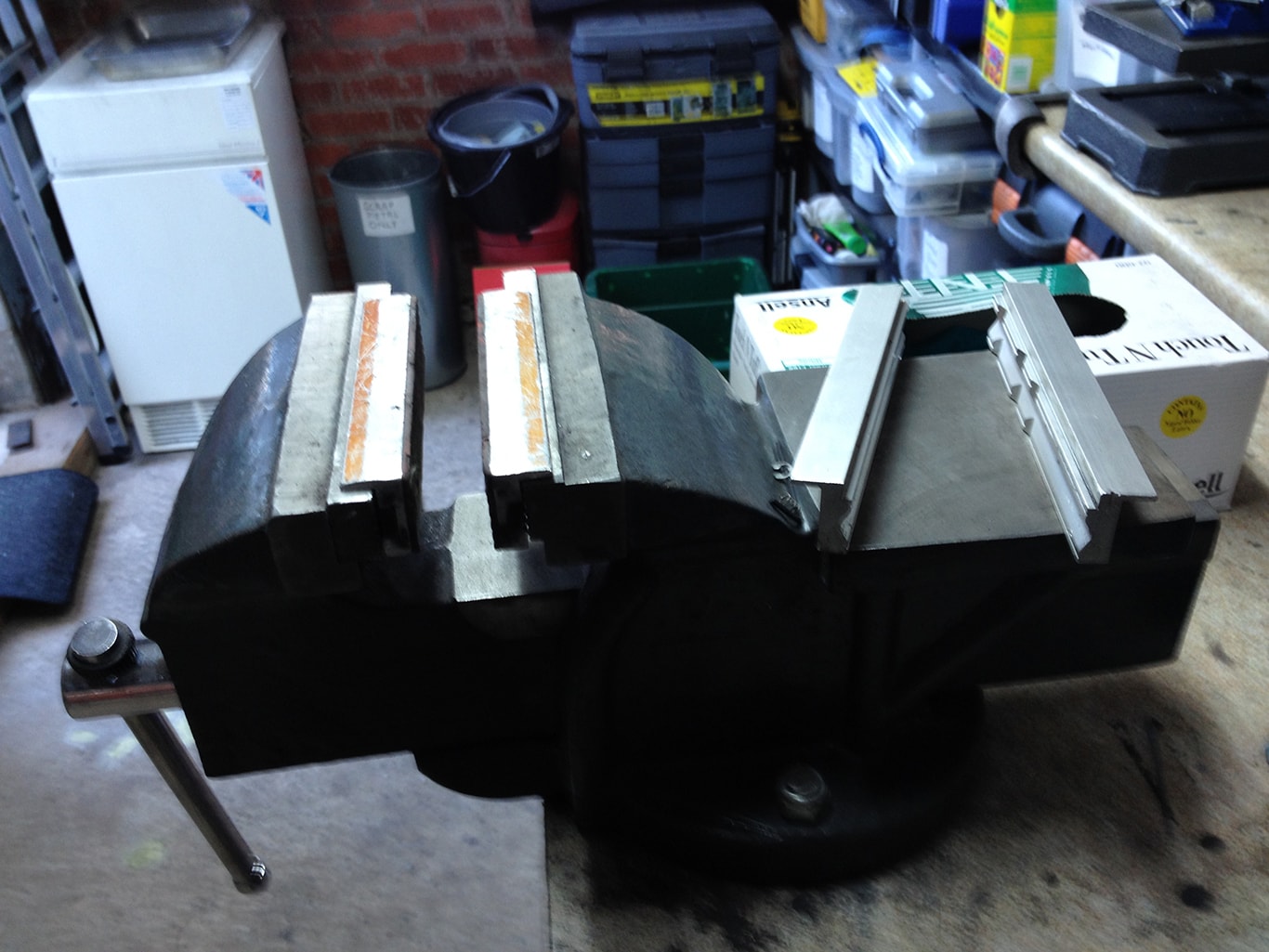
1. A Vice
2. Soft vice jaw covers
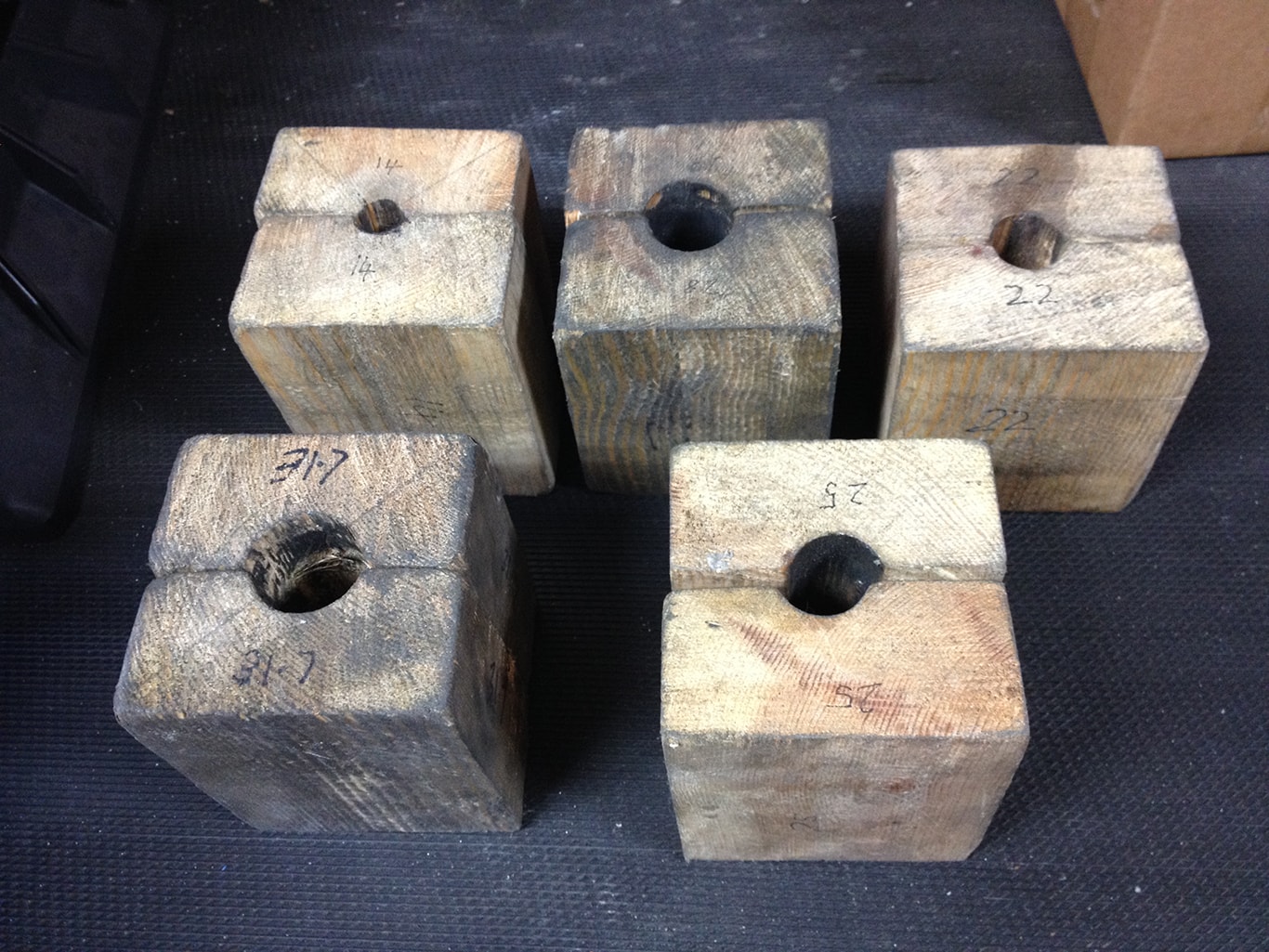
3. Tubing blocks. I made my own by drilling a holes through sections of 4×4 softwood then cutting them in half. The Bicycle Academy often have them for sale.
4. Metal hacksaw
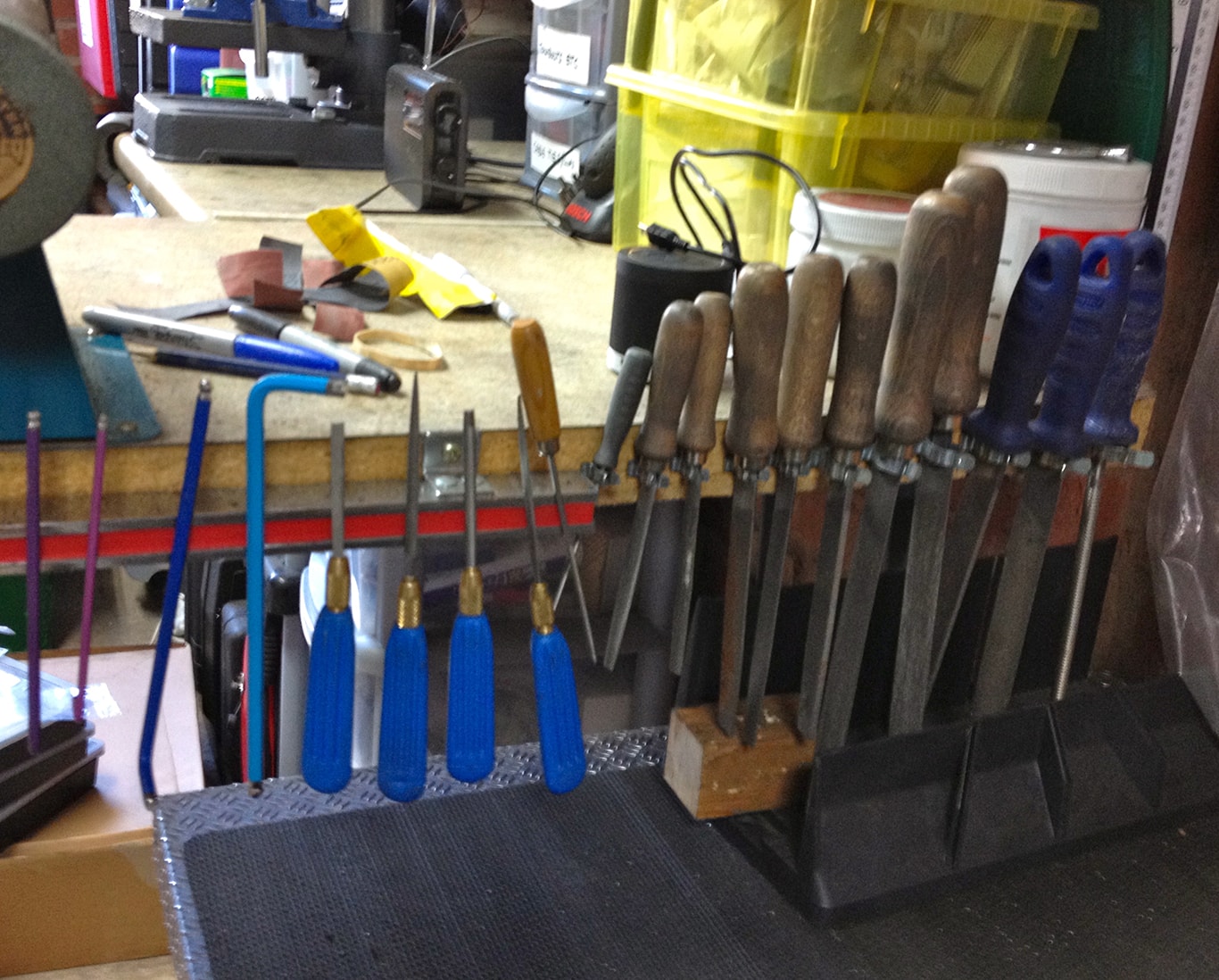
5. Standard files, half round only are really needed, 8, 6 and 4in all are useful depending on preference, but probably in that order, as are all three grades bastard, second cut and smooth with second cut being the most universal. I have never used 10in files.
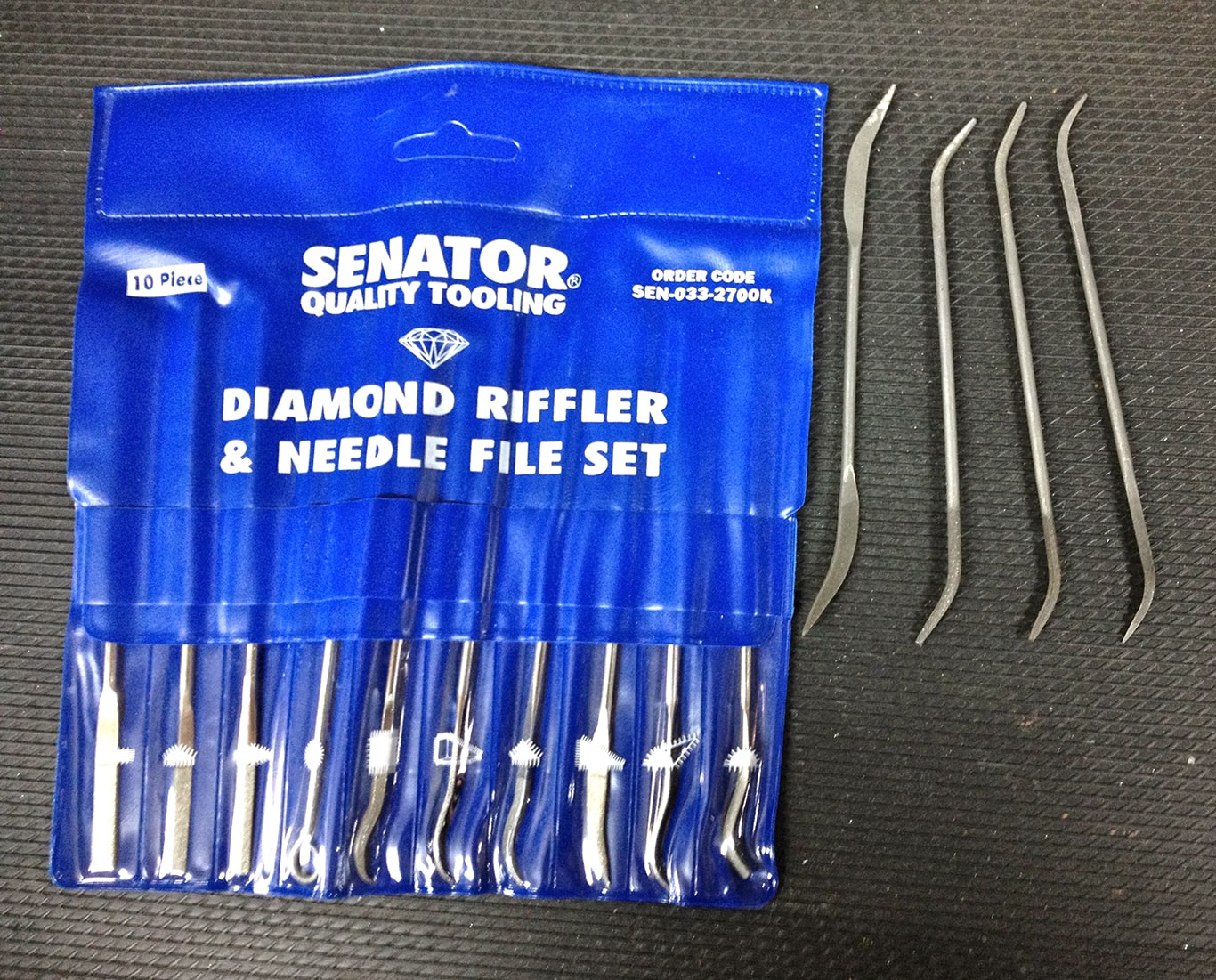
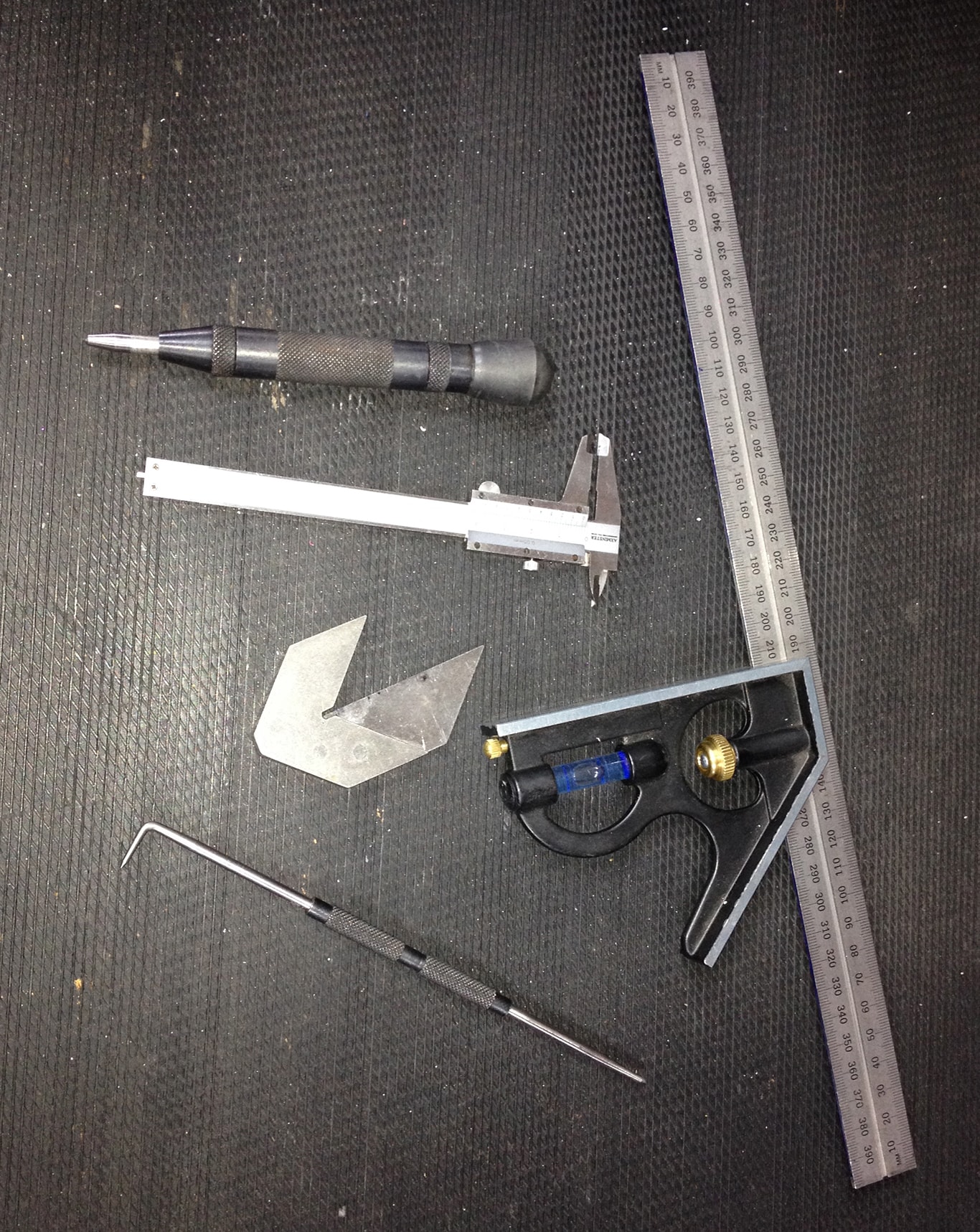
6. Small needle files. Riffler files can be helpful for final filing of lugs and fillets.7. Spring loaded centre punch.
8. Metal scriber.
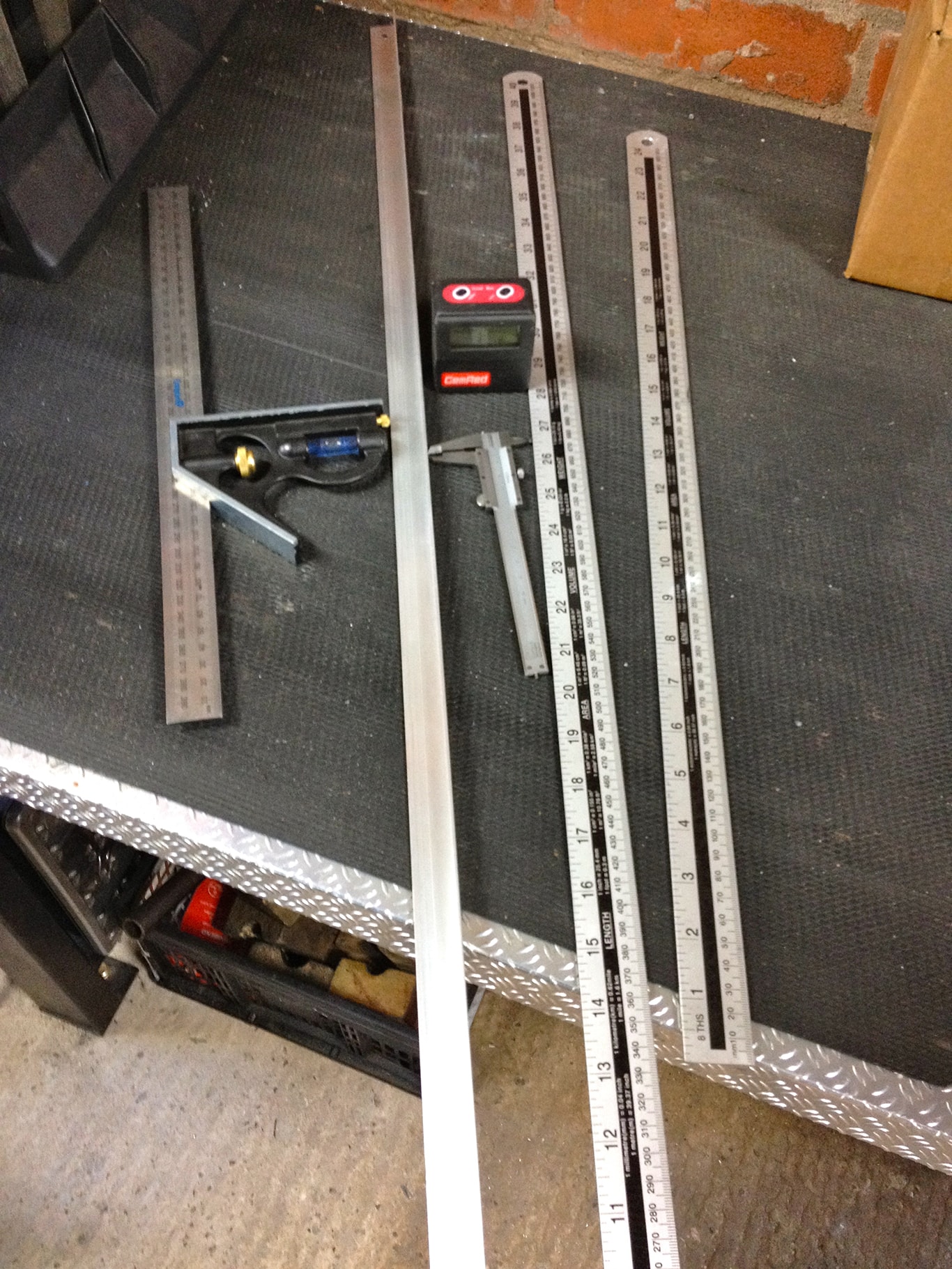
9. Long steel or aluminium ruler.
10. I use a length of aluminium angle profile for scribing centre lines
11. Combination square.
12. Some form of angle finder / digital protractor.
13. Vernier caliper.
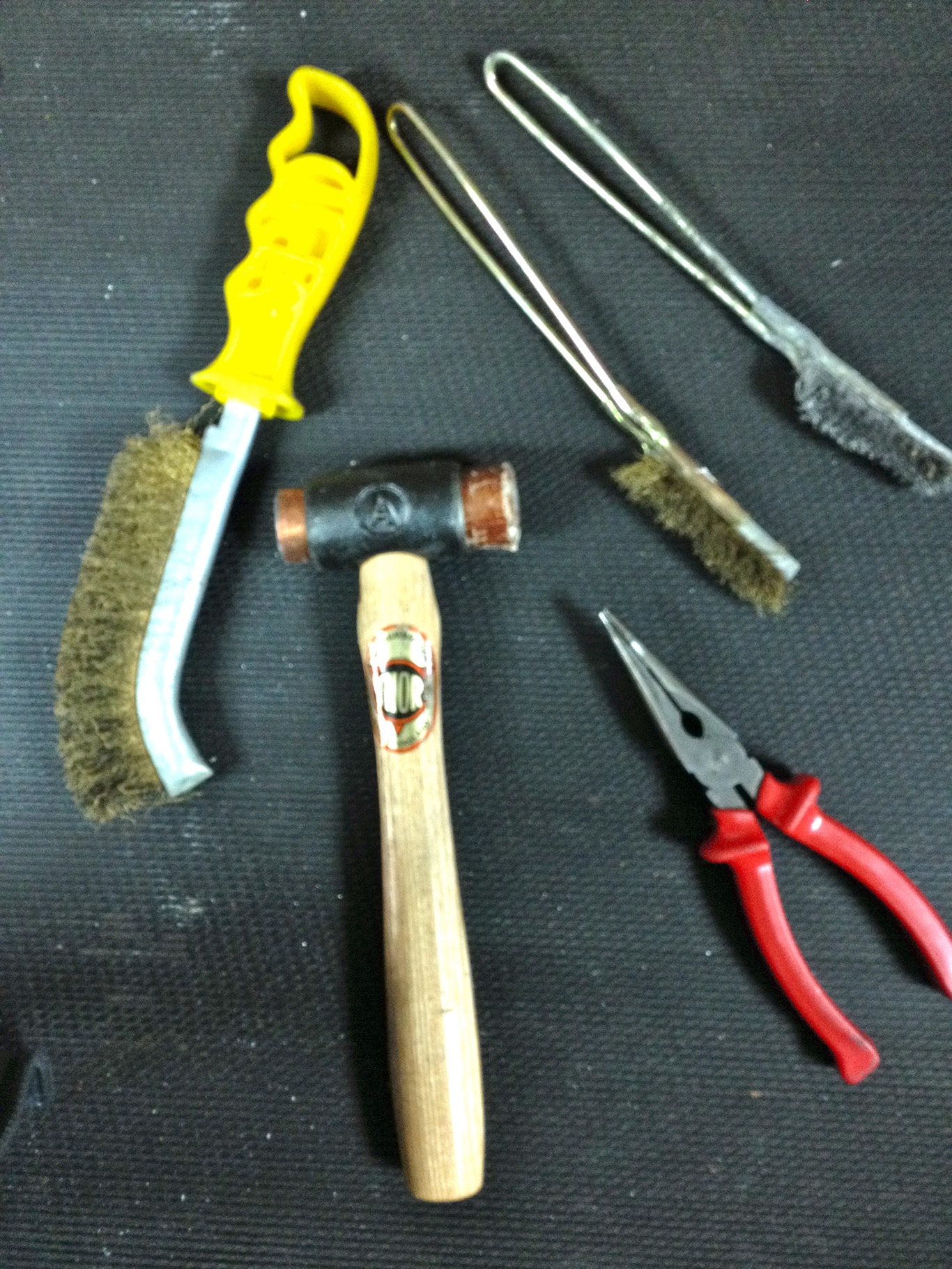
14. Wire brush.
15. Pliers.
16. Soft blow hammer, for tapping home lug tines etc to fit.
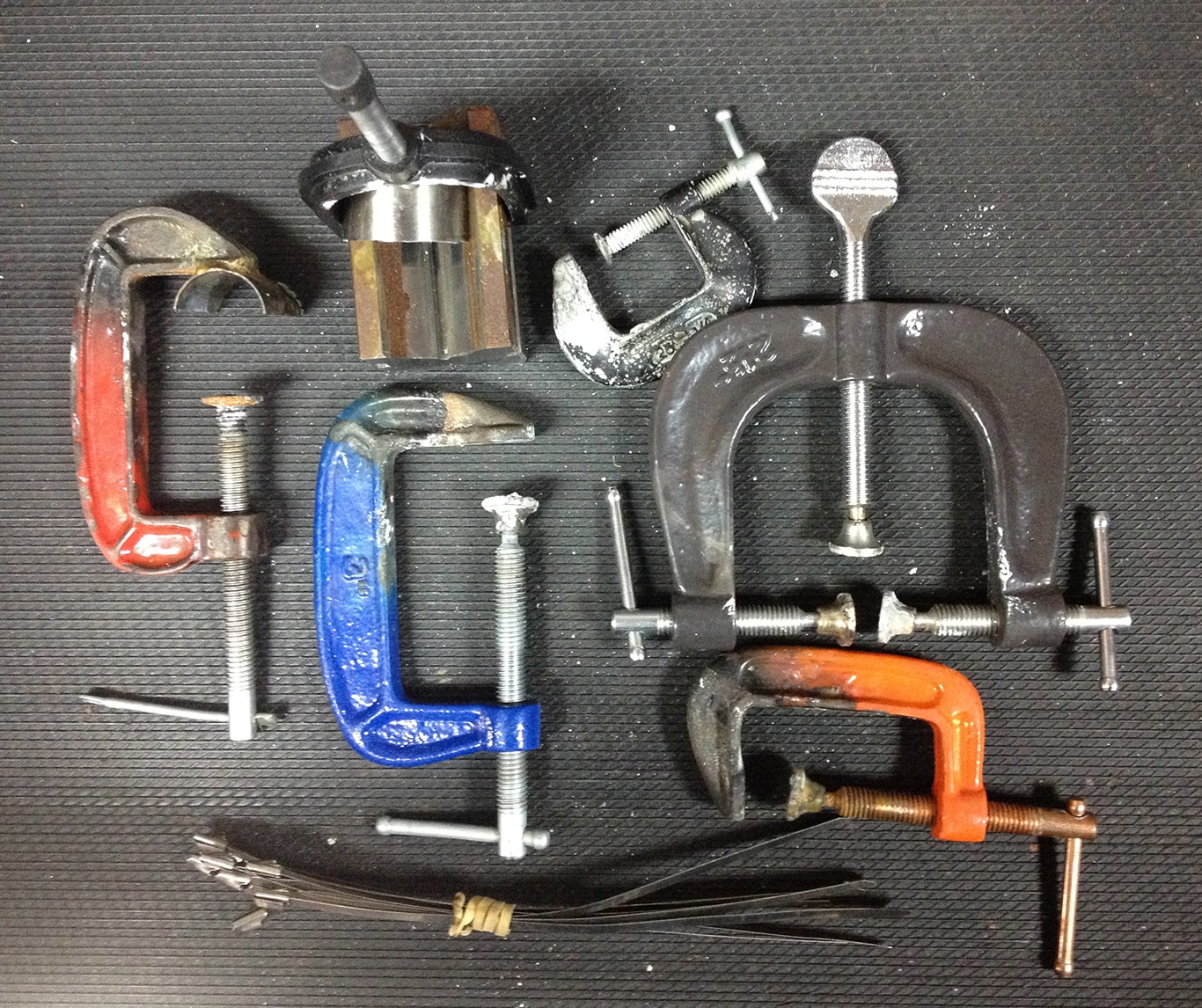
17. Various G clamps are useful. Steel ones are better so you can braze on bits of half tubing to grip onto the frame tubes better when attaching braze-ons. V blocks can be useful for this also. I like to use stainless steel cable ties for securing small braze-ons. They are expensive though are cheaper to buy in larger quantities online than a small pack from Halfords. Do not direct the torch at the cable tie as they burn easily, but add the filler rod carefully around it then cut it off with the flame when complete.
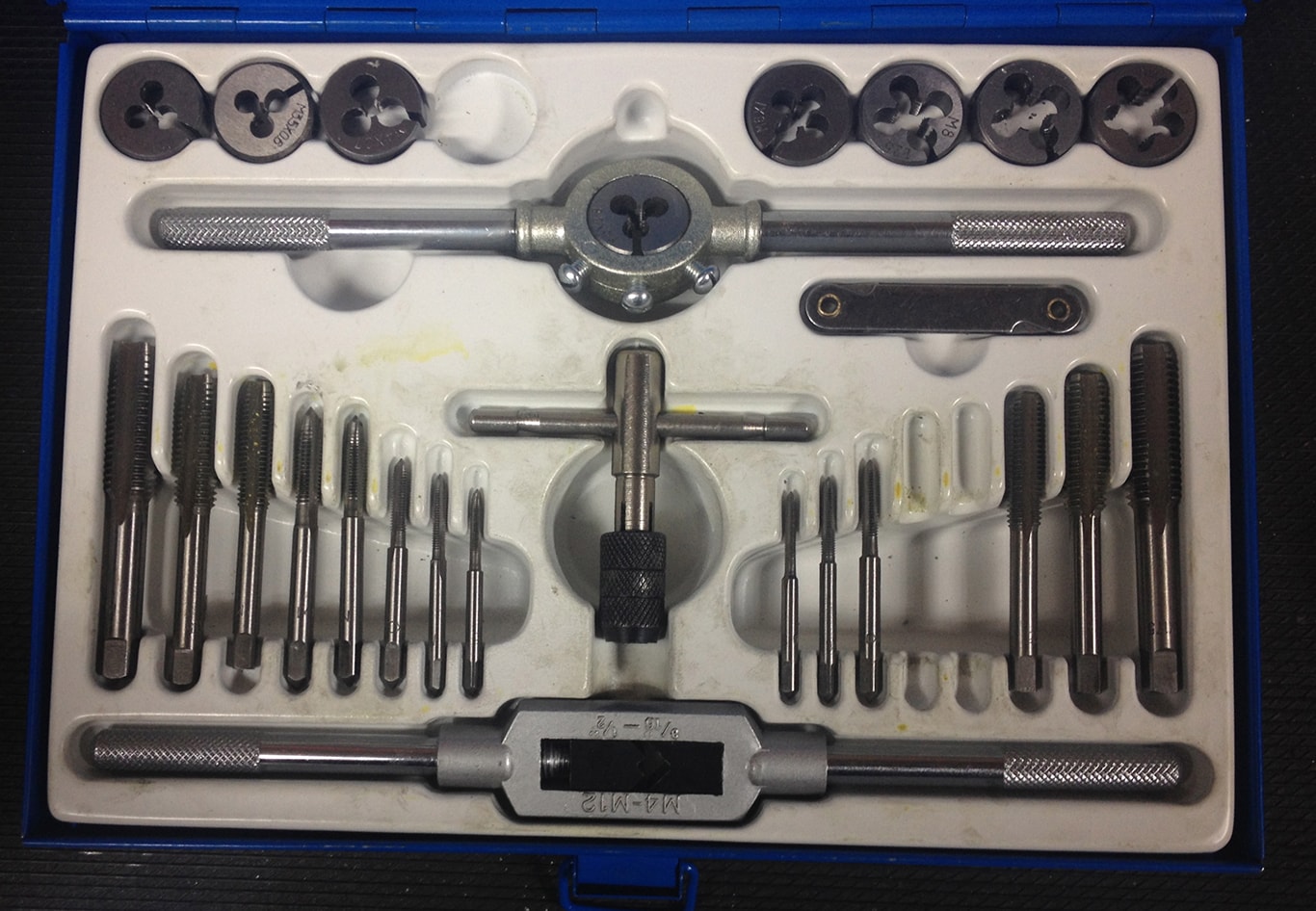
18. Thread taps. Small sets are inexpensive but generally you only need M5, occasionally M6 and for derailleur hangers M10. I think it is better to get just the ones you need of better quality, such as those sold by Ceeway rather than a cheap set, though you do need a handle of some sort. Take great care tapping new threads such as in the bottom bracket for a cable guide. Use cutting oil and screw and unscrew frequently rather than forcing the taps. I have snapped more than one tapping threads and it is very slow work getting them out afterwards.
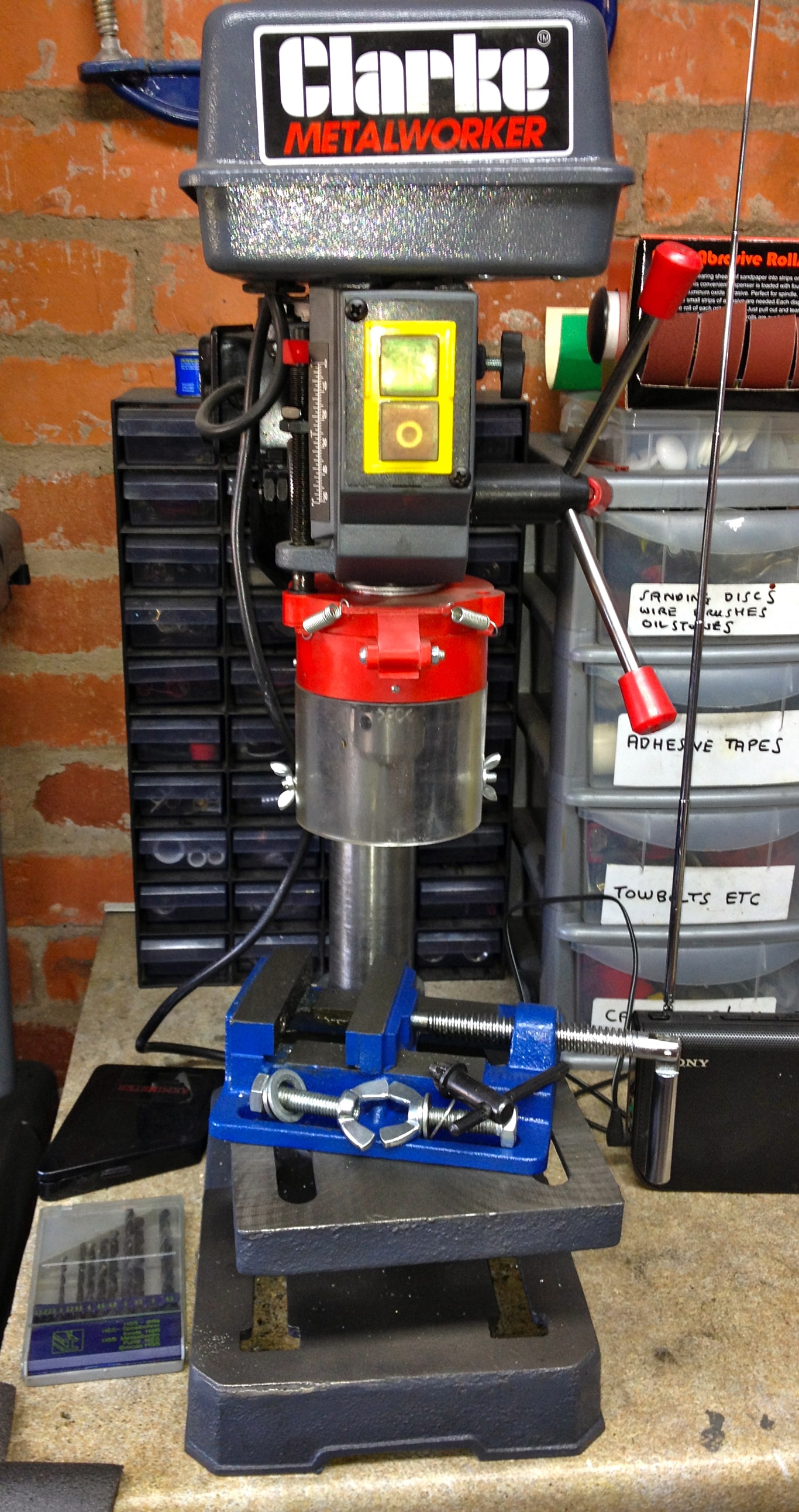
Power Tools: The only “essential” power tool is a drill. Corded ones have more grunt than cordless. A drill press is a boon but it is limited by the amount of access you have around it when working on long tubes. I would get the best and largest one you can afford. Always use cutting oil when drilling steel.
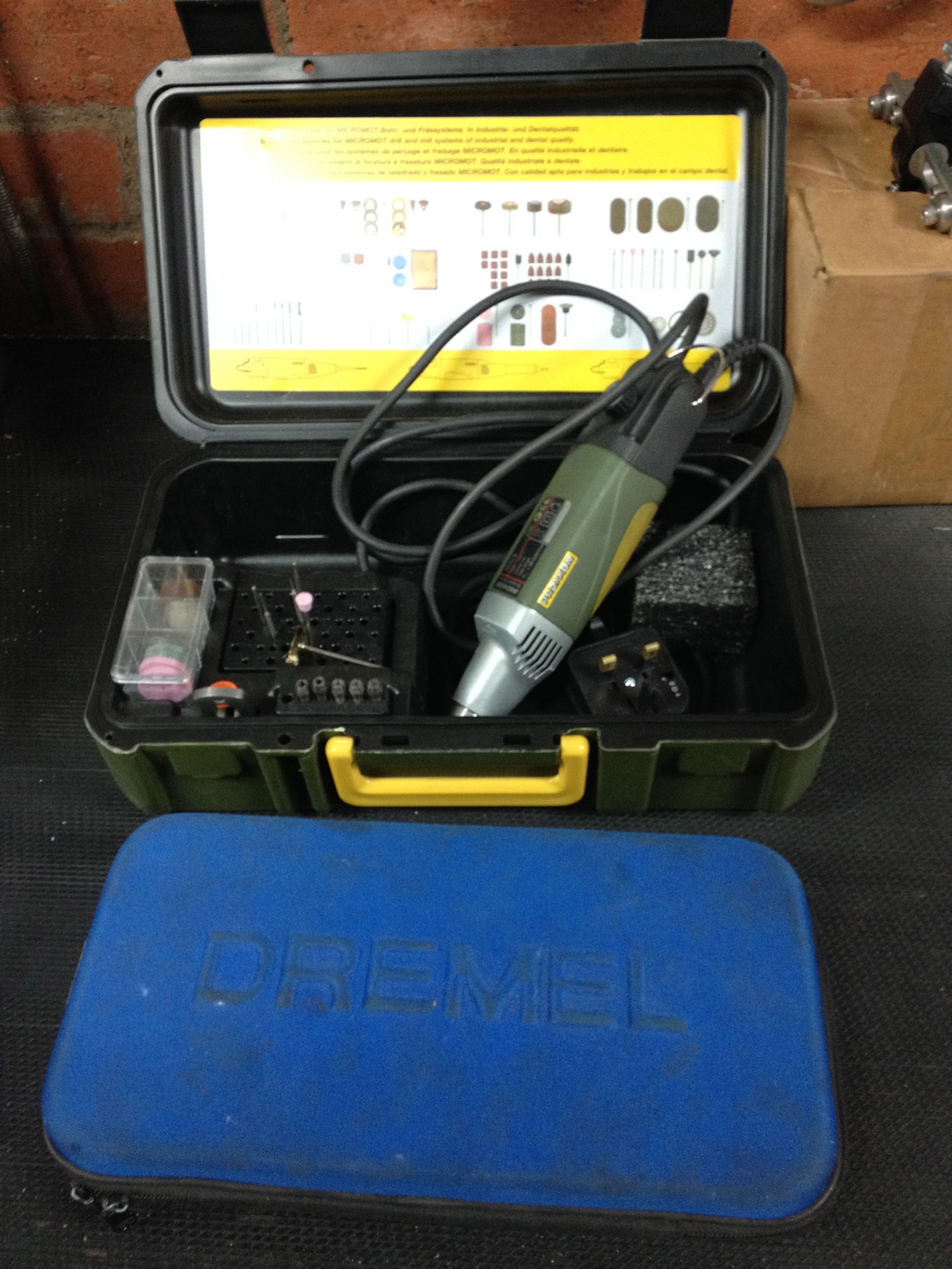
A Dremel or similar rotary multitool is very useful for sanding, grinding and especially as a mini disc cutter. I have burnt out three despite repairing two of them with new parts. They have lasted me about two frames more or less. They do not seem to like fine metal dust and even stripping and cleaning them regularly has only extended the life a little. I am now using a Proxxon tool which has so far out lasted the Dremels but this may be because the better you become at framebuilding the less you need to use them. If you buy a Dremel I can recommend Argos who give a no quibble replacement service for the first year. I suspect if you take out their three year extended warranty you may never need to buy another one again!

Bicycle repair stand: I now use a Park Tools repair stand for fillet brazing outside of a jig as it helps top be able to easily rotate your work. I have used cheap ones but they are not wholly satisfactory and I don’t feel there is much else available to compare with a Park stand. Unfortunately the full size stand with baseplate is not only very expensive it takes up a huge amount of floor space so I have got round this by fixing a wall mounted stand to a piece of timber and I clamp it in a portable vice (another really useful tool) so it can be taken down and stored easily. (see photo at top of page)
Frame Finishing Tools: To complete a frame for building and prior to painting you of course need access to the following tools:
A Bottom bracket thread cutter or chaser, the chaser being a little cheaper. most bottom brackets come pre-threaded in any case.
A Bottom bracket facer.
A Head tube reamer/facer.
A Seat tube reamer.
If you are making forks you will need Crown race cutter and Steerer tube threader for threaded forks, though steerers can be pre threaded they may need extending.
I am frustrated by the fact no manufacturers seem to make a universal set of handles to hold all their cutting tools despite their obvious similarity. Even the cutting and chasing bottom bracket tools from Cyclus have different fittings so the handles are not interchangeable. I use an adjustable hand reamer rather than a specialised seat tube reamer. The one I have was made in India and cheap. I have found it works well. Just make sure it covers the size of seat tube you will be reaming, mine covers the 27.2 to 31.6 range.
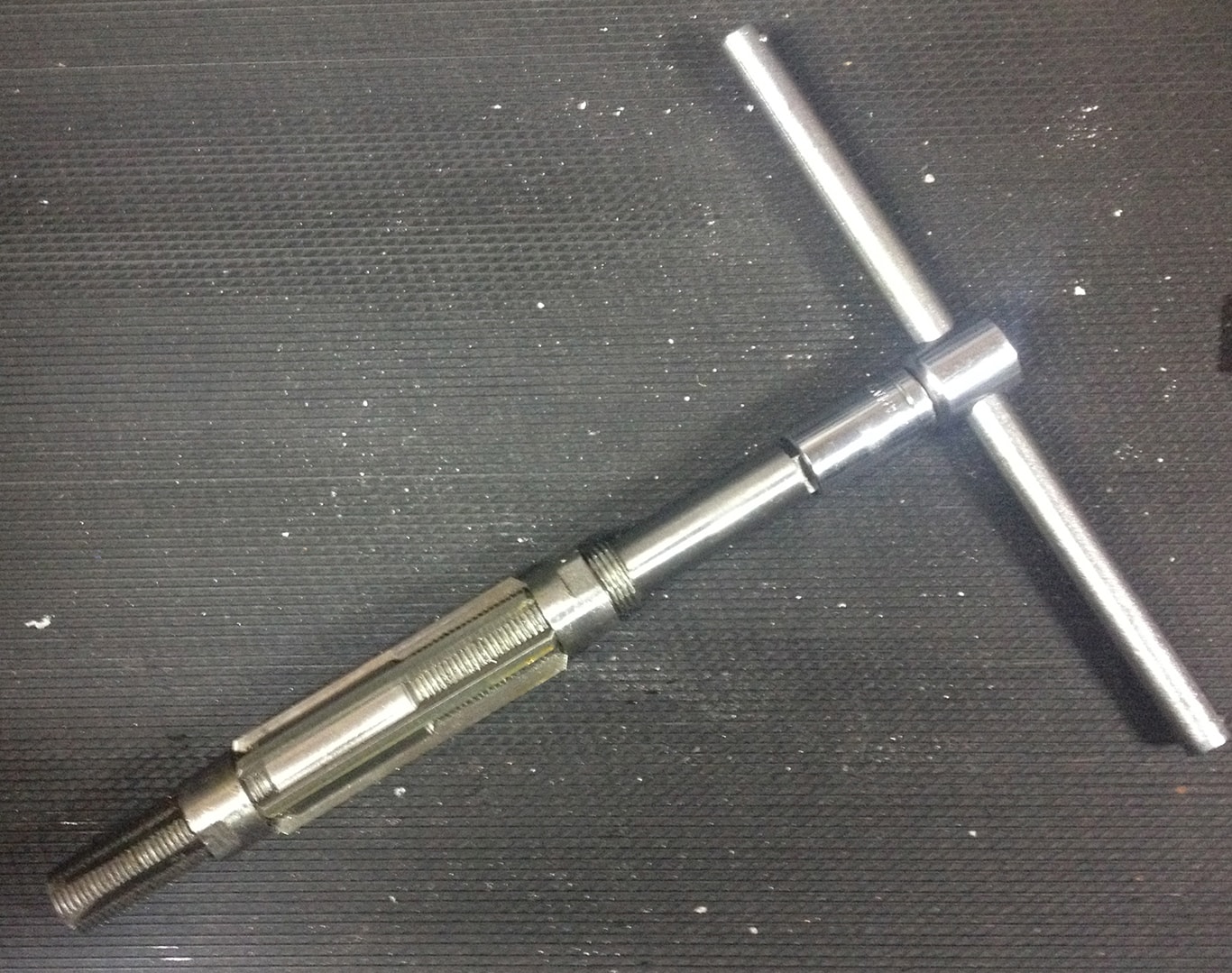
You do not need to buy a special handle as standard socket set handles will fit. Only make very small increases in the reamer diameter as you go, say 1/4 turn, to avoid getting stuck and always use cutting oil. I cannot see it is possible to perforate even a thin walled seat tube using a hand reamer. If you cannot run to buying the more expensive tools most decent cycle shops will have them and may be prepared to do the jobs for a price. Also if you are using a professional bicycle painter the chances are they will also carry these tools, maybe Bicycle Cooperatives do too?

1 thought on “Basic Hand Tools”
Happy New Year. My best Christmas present was an angle grinder. It would appear to be a very handy piece of kit to speed up gross removal of metal when preparing mitres. I also anticipate that it will help when forming chainstay tube caps. Kind regards, Charlie.