I was one of the first to order a Skarper electric assist device as promoted by Chris Hoy. I thought it may solve my declining performance but sadly I was wrong. I was fed up with being overtaken up hills by just about everyone and was additionally seduced by the only online review at the time by a cycling journalist. His exaggerated feelings about the potential range enthused me, but it turned out to be over optimistic. I also thought it was a potentially useful device for me as it would mean I could still use my custom bikes. More recently it is being promoted by more frame builders as a solution and they are making it available with their bikes. Shand Cycles displayed it at the Manchester Bespoke exhibition, having developed a permanent hanger on the chain stay to replace the supplied one, which I think is a great innovation, and an example I would follow were I to build a frame specially for the device.
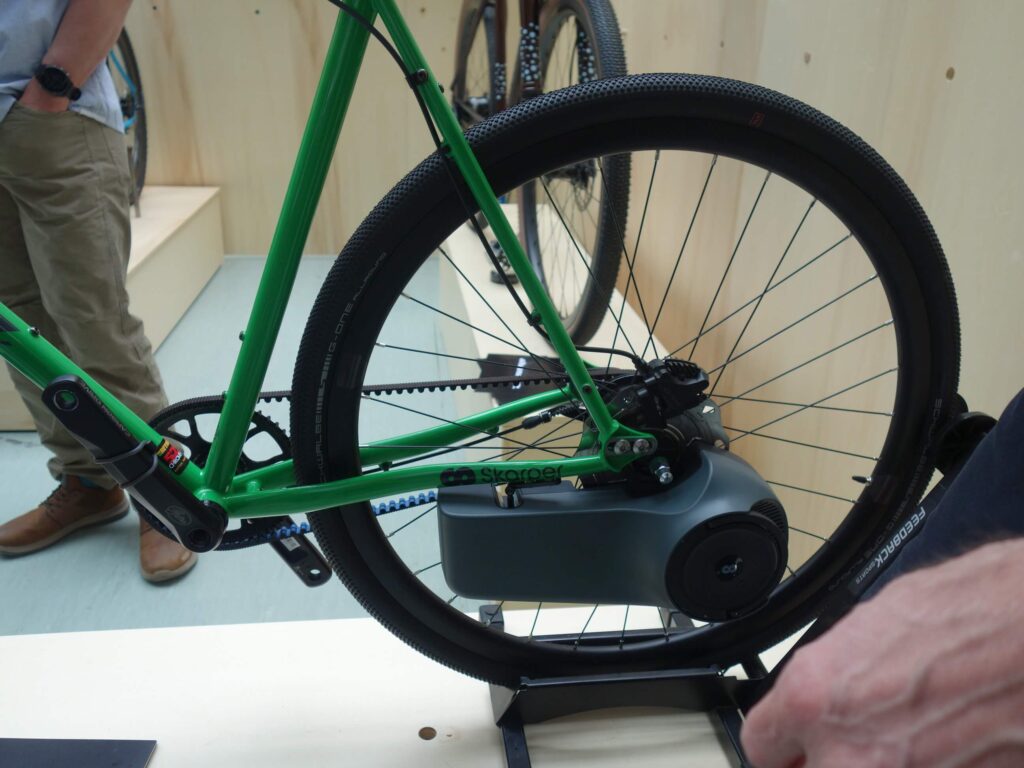
As for the Skarper itself, it seems to be very well made, robust (apart from maybe the clip on chain stay hanger). It charges in about 3 hours or less. It is easy to remove and carry into a cafe or put in your shopping trolly maybe. The whole system weighs about 4.5 kg, I did not check this, about 500g being the replacement disc which contains the gearing and drive mechanism.
It is not difficult to fit and set up but I found the set up instructions must be followed PRECISELY to make sure it pairs and operates properly i.e all steps need to be performed in the correct order. There is a sensor to strap on the crank arm with an integrated rubber band. It connects via bluetooth and should last several rides before it needs recharging.
The problem is, it is NOT FOR THE SERIOUS BUT IMPAIRED CYCLIST due to the limited range. It may well be a fact that that battery range can vary considerably depending on use. The reviewer mentioned above, I would respectfully suggest, did not need an electric bike as such and may well have thought that a lot of the time you will be riding above the cut out speed. The device like other electric bikes is designed to cut out at 15.5 mph (25kmh). I would contend that not many cyclists who need electric bikes can pedal above that speed for sustained periods and going downhill above that speed never seemed to happen all that often for me. I find that cycling alone I would likely exceed the cut off speed more often than group leisure cycling, which is what I do most of the time.
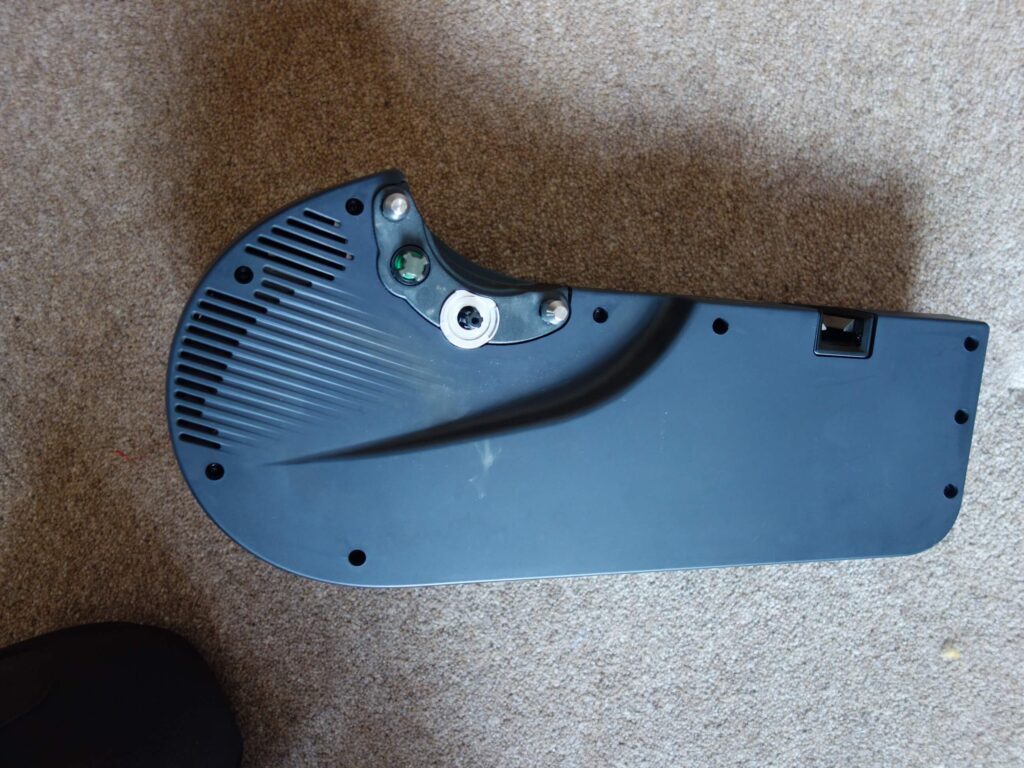
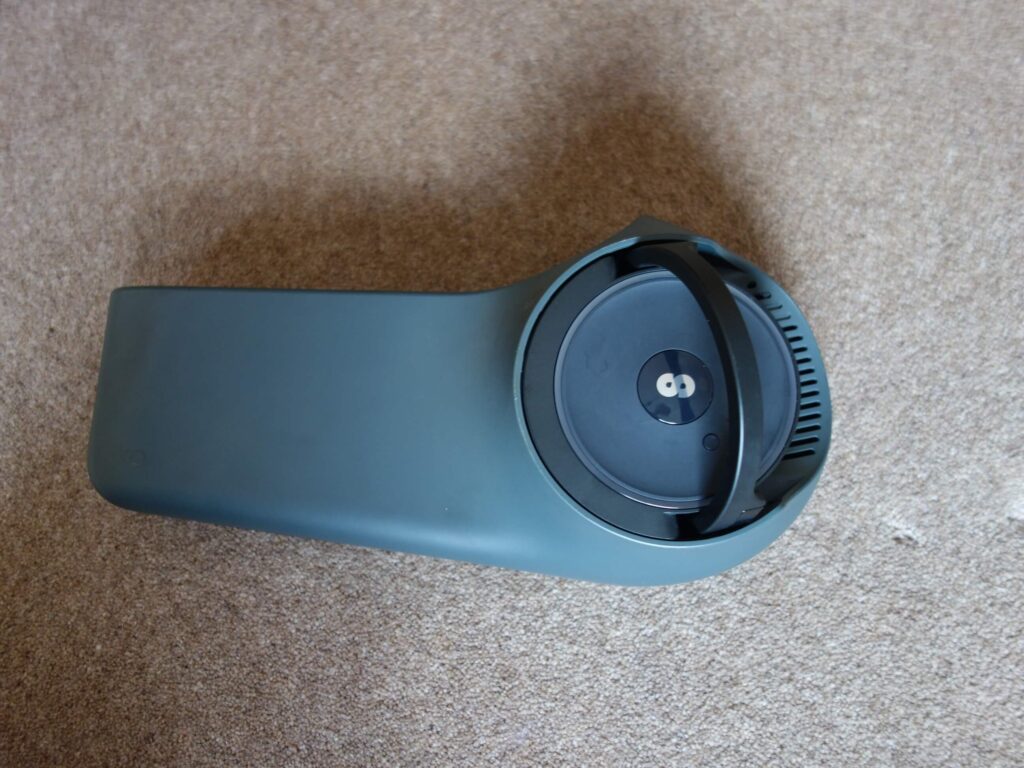
In fairness to Skarper the current predicted range is 25 -50 Km ( 15.5 – 31 miles) This is in Eco mode, which is the lowest of 3 settings. I never used it in any other mode and was only able to achieve 25 miles for a flat ride and 22 miles on a lumpy ride. I used it on a custom steel road bike, large size, with very light components, base weight sub 9 kg. The device has some sort of torque sensor which detects when you are straining more up hills and increases the torque to compensate. I felt this was unnecessary and I did not want the extra boost as I assume it drains the battery more quickly.
You can pause the battery assist whilst riding by back pedalling 3 times, and restore the power by repeating the process. This is far from ideal. Skarper have now produced an App for phones which means the device can be controlled from the App, which may be a benefit if you have a phone holder for your bike. The App wasn’t available when I was using mine, so I have not tested it yet especially as I have, so far, been unable to connect my phone with Bluetooth (which in itself should be no surprise!). Without a visible App you would have to get off the bike to view the coloured lights on the device which relate to the state of charge, and to change the power level. Having seen the App demonstrated on Youtube it seems you can change the power levels easily amongst other things. Personally I am not a fan of carrying my phone on the handlebars.
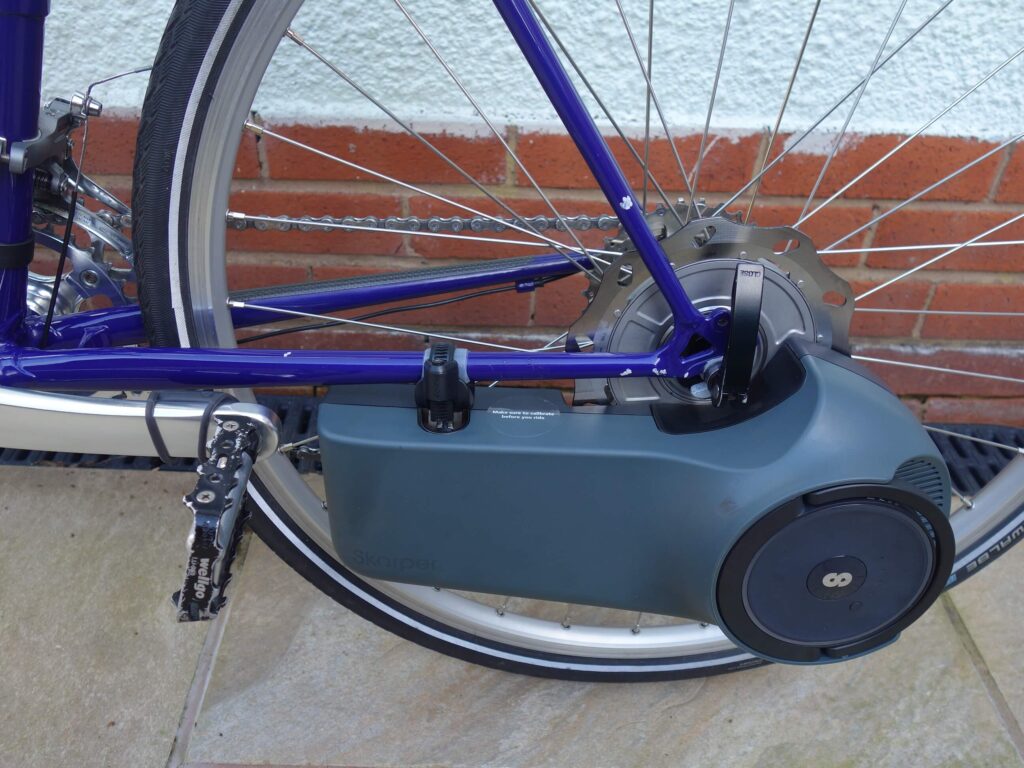
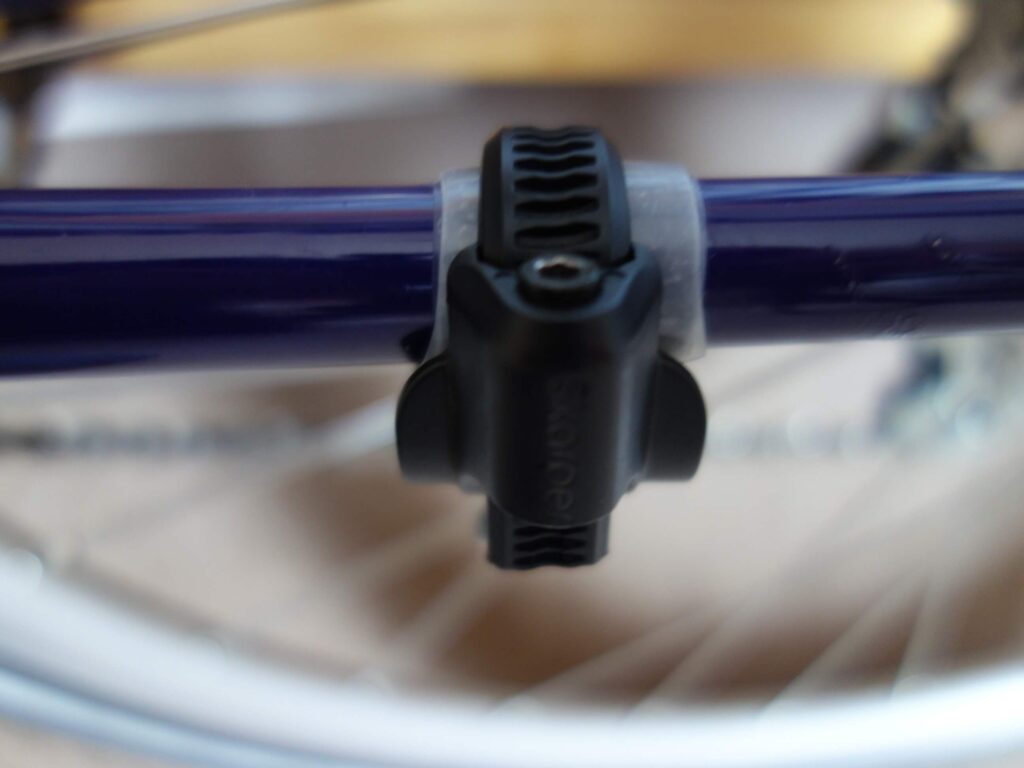
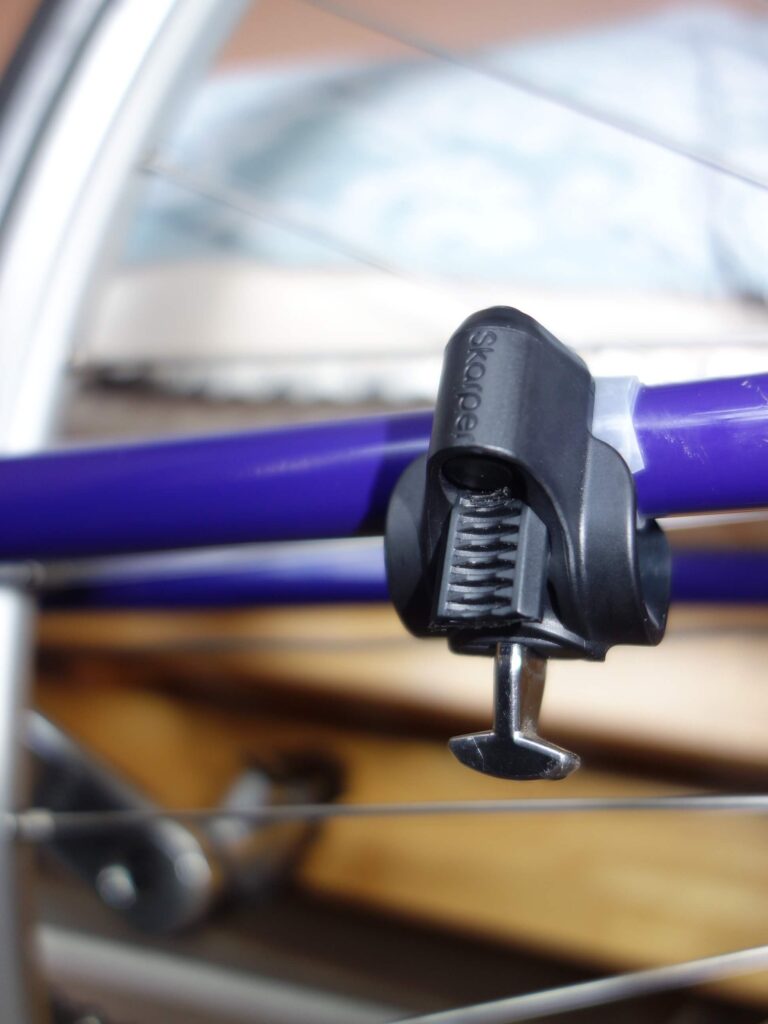
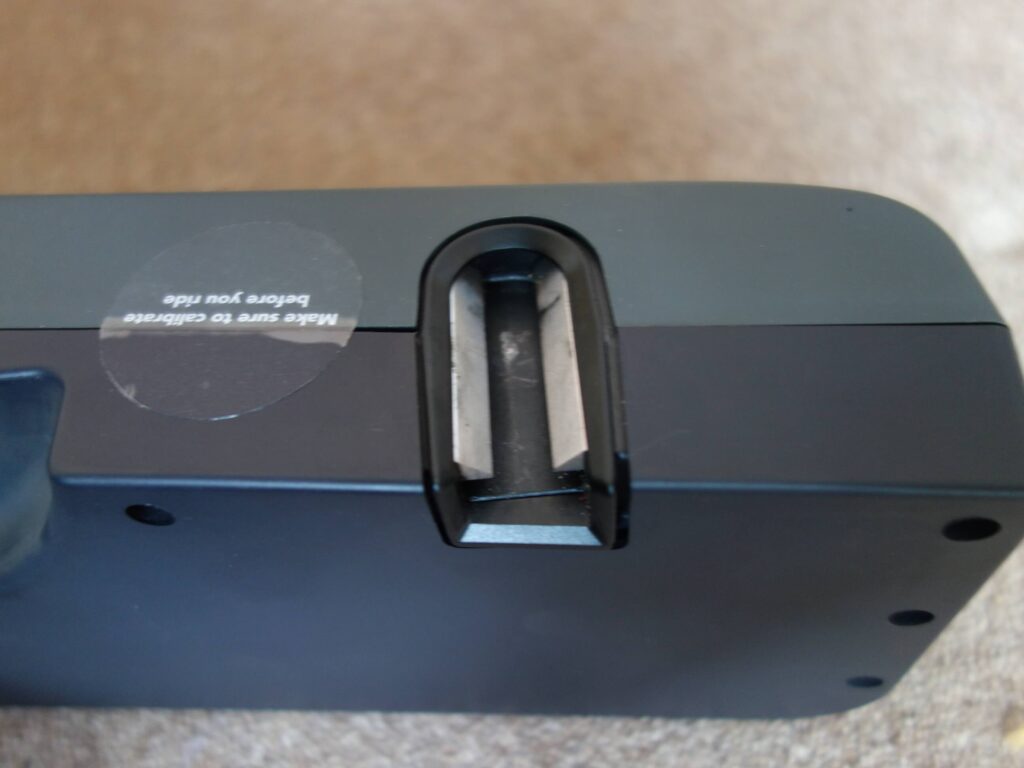
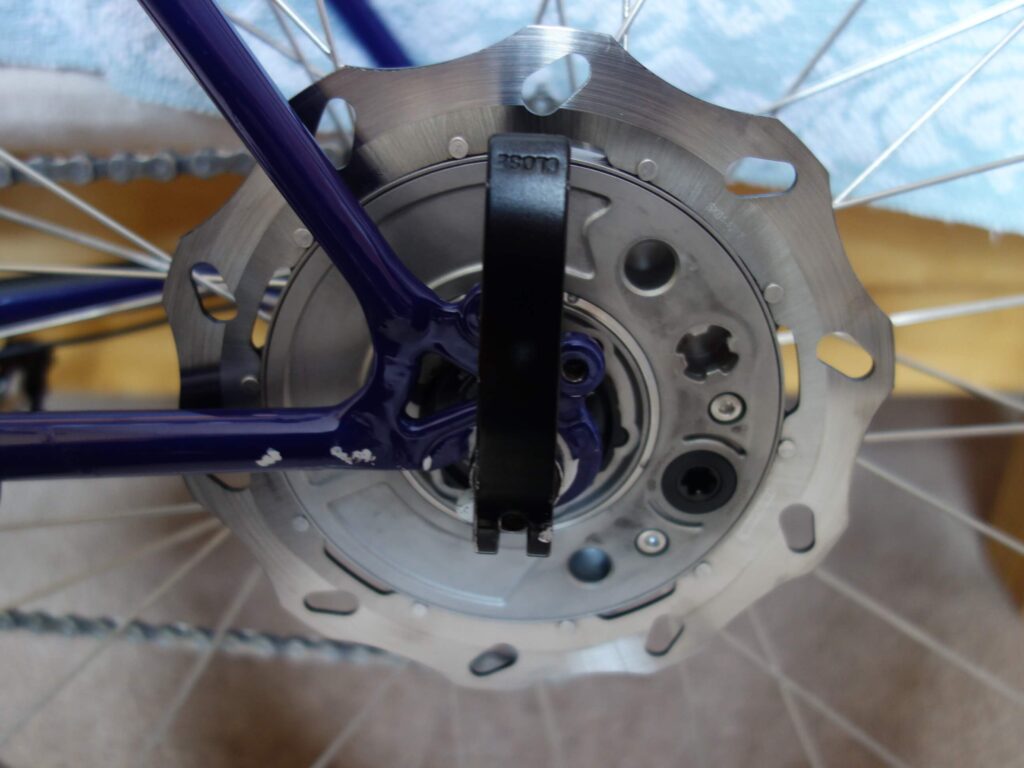
I would concur with Skarper it is likely to fit most bikes provided they have a disc wheel, being only unsuitable for full suspension bikes. I would say the weak spot, if any, is the chain stay clamp, which is plastic. I found the strap can easily be damaged by over tightening. Skarper provide a small amount of frame protection tape to go under the clamp. This appears to be self amalgamating silicone tape. The securing hook needs to be positioned EXACTLY in the centre of the sprung slot on the device otherwise there is a risk of it bouncing out of position. If you are using disc brakes, which I guess most will be, you cannot replace a worn disc and would have to return it to Skarper for replacement. Also the whole unit needs to be returned to replace the battery eventually.
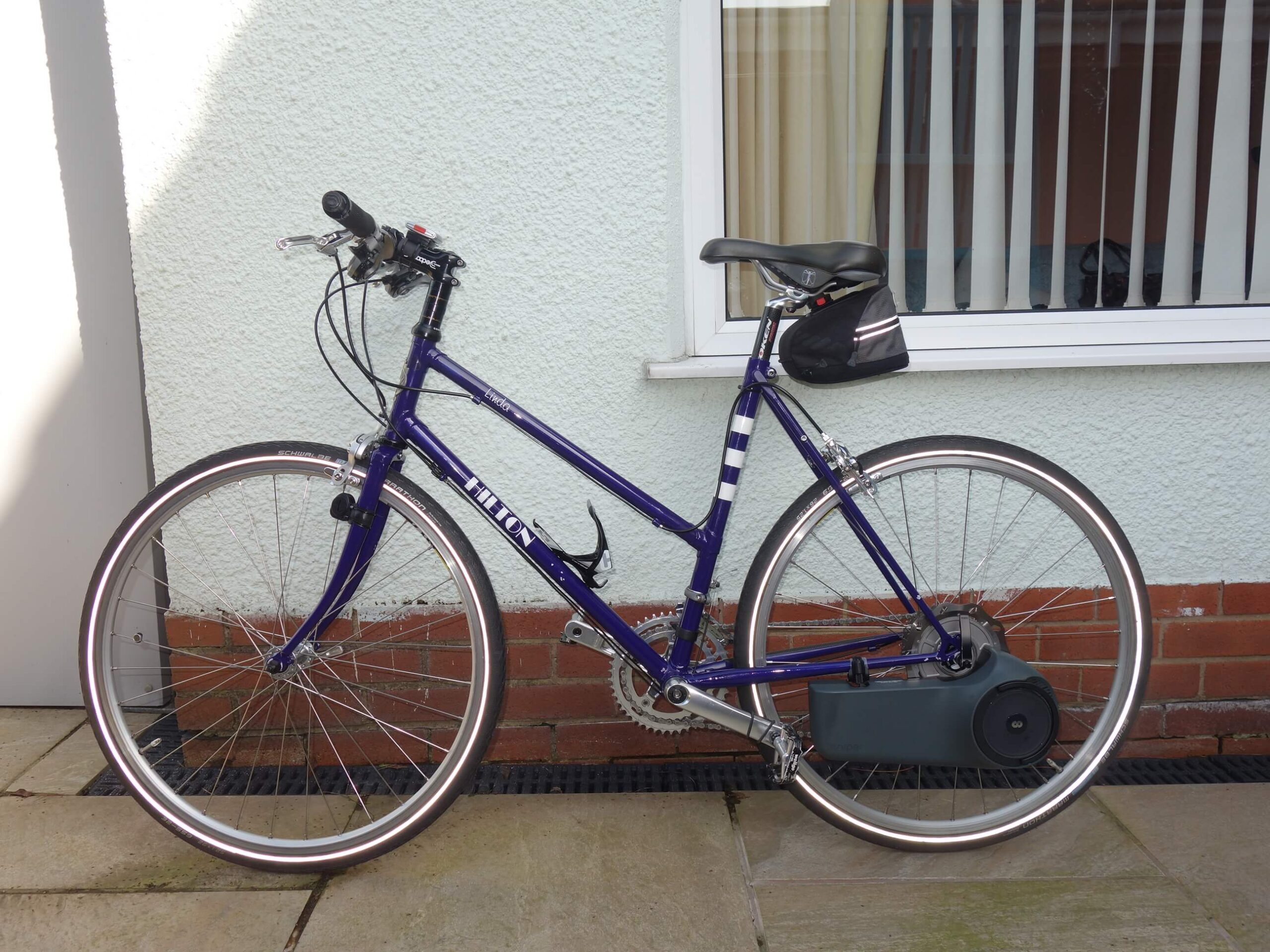
On my large frame with 142 rear spacing and 28 mm tyres I could occasionally feel my heel brushing the device, but it was not a problem. The guidance for fitting is a chain stay length of 415 mm and a distance of at least 220 mm from the end of the crank arm to the wheel centre. Probably either will do as I have now fitted it to a 26 in wheel bike with 135 mm spacing where the chain stay length was 410 mm but the crank clearance 225 mm. The heel clearance in this case is actually better. I had to have the rear wheel re-built with a disc hub as this bike has caliper brakes (This is the bike in the photographs). You are aware of the extra weight whilst riding without power, which I did quite a lot. It is not too much of a problem provided you do not have a very heavy bike in the first place.
Overall it is a well made, probably reliable, adaptable device. It is however expensive against alternative devices at £1495, though you are probably paying for the build quality. The back up from Skarper seems excellent from my limited interaction with them. I have also seen them discounted by £100 by one retailer.
SNH 11/4/26