
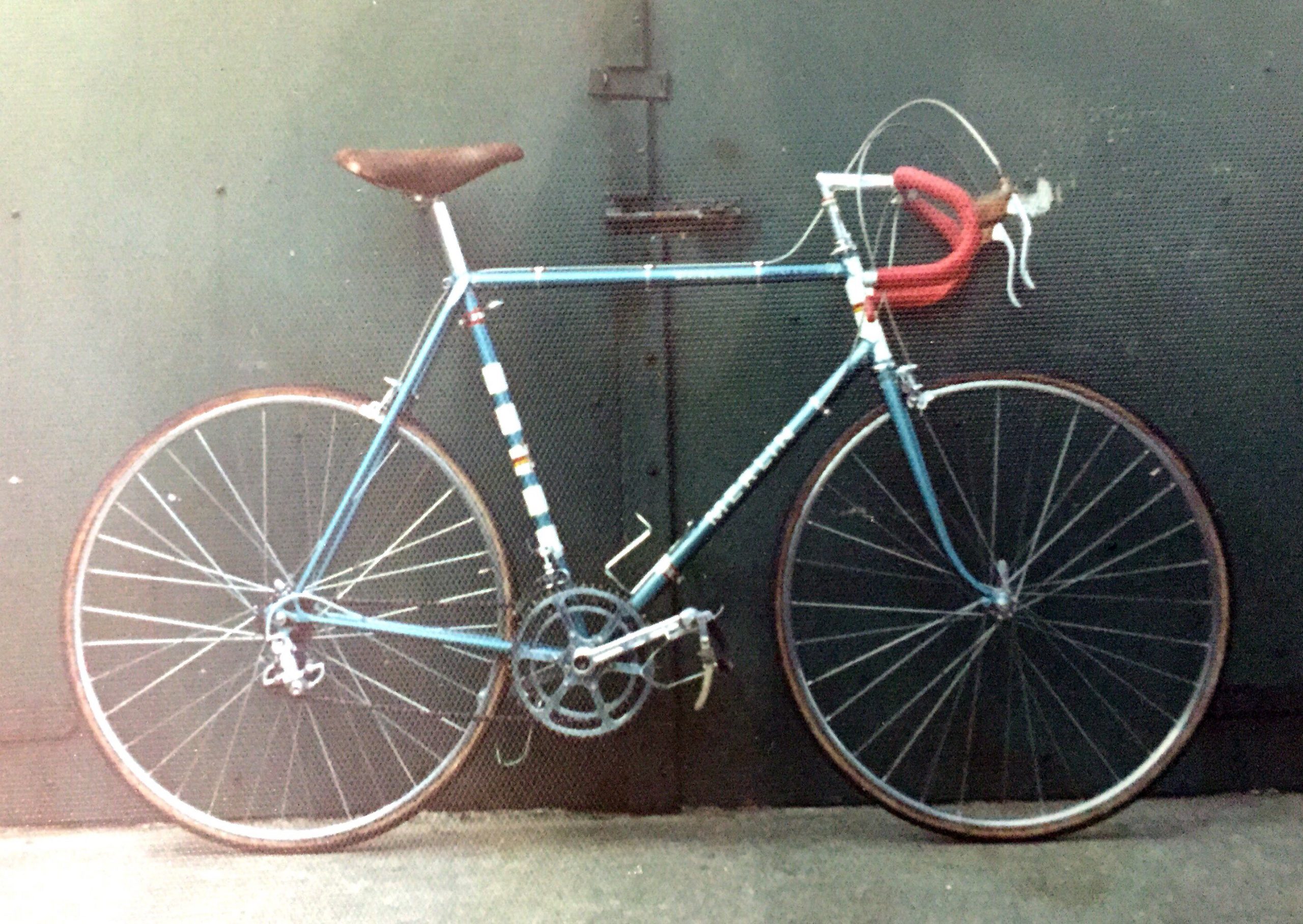
When I was a youngster in the late 60’s, early 70’s, every cyclist wanted a Reynolds 531 steel framed bike, preferably custom built by one of the well regarded framebuilders of which there were many. Locally we had Harry Hall with Roger Kowalski and Johnny Berry. Further away was Bob Jackson, Pennine, Ellis Briggs, Harry Quinn, R J Quinn and Mercian,not to mention the London frame builders.
I finally got my 531, a Merlin by Bob Jackson from Harry Hall’s shop in Manchester after several years of saving up, sadly it was off the peg but I am still riding it today. I wonder if my carbon fibre road bike will still be around in 40 years, I doubt it.
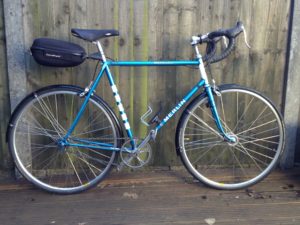
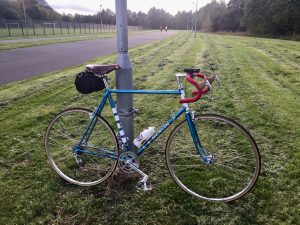
In need of a home based retirement hobby I thought I would like to perhaps build the custom steel frame I couldn’t afford as a youth. It would have been a lot cheaper to get a professional to do it, but then that would have their name on it. Having no metalworking or engineering background I went on a basic welding course at a local college, 4 whole days spread over 4 weekends. The course taught me how to ARC and MIG weld, not much use for bike building but I did get to use an acetylene gas torch for most of two of the days which was helpful. The little bit I was taught about brazing was completely at odds with what I was subsequently taught on bicycle brazing courses and an hour of TIG welding taught me that it was very difficult!
In 2010 I could only find two people teaching frame building to amateurs in this country. Dave Yates in Lincolnshire, who regularly has a two year waiting list and Martyn Hay at Downlands cycles in Canterbury, who were able to accommodate me within a few months, so that is where I built my first frame over 5 days.
I initially asked to build a Reynolds 853 fillet brazed light touring frame, but Martyn, very sensibly, advised an 853 lugged frame. My feelings about the course were mixed. I certainly built a bike frame that fitted me well. Martyn performed a frame fitting beforehand which did not diverge significantly from the frame size I was already used to. The course was hard work and quite pressured to get the frame completed in the time allotted, though it was enjoyable. We often overran which was less of a problem for the students than the teachers, but they never complained. I went home with a frame that still needed some burnt-on flux removal, and on soaking the frame at home I discovered some gaps in the lugs when the flux finally came away. I had found that the most difficult thing for a student frame builder is differentiating molten flux from molten brass, I am much better now.
I then purchased a mini-welding kit (oxy-turbo) which are available from many online welding suppliers. I was able to use this to reheat and fill in one or two small gaps but quickly realised it would be inadequate for building a full frame. After a few hours of sanding the edges of the overfilled lugs the frame looked reasonable and I took it to be painted at Atlantic Boulevard in Bury. Rather expecting some hilarity at my efforts, Neill very kindly agreed to paint the frame with only words of encouragement. With a bit more cleaning up and a thick paint job I was at last happy with the result. Finished off with carbon forks I have since ridden hundreds of miles on the frame before dismantling it having somewhat abused the paint job.
The Lessons I learnt from my first frame course were:
You cannot build your dream bike the first time, realistically I never expected to.
You cannot build a really decent well finished frame in 5 days, better do a two week course.
Use your first frame building course as a learning experience, a good useable bike is a bonus.
This was my experience, but I know there will be some who feel a decent bike frame is more certain.

After a few months I hankered after building more frames, in particular to build some frames I really wanted to do.
I followed Martyn’s suggestion and set up and oxy-propane torch system, as I really did not wish the expense, risks or complexity of oxy-acetylene. I bought the cheapest commercially available jig I could find from Brew Cycles in North Carolina USA.

I obtained a new builders starter tubing and lug kit from Ceeway framebuilders supplies in Erith, Kent, and went about building a small ladies frame for my wife on the new jig. After completing this I returned to Downlands for a fork building course to complete the bike. Again we overran the all day course to complete the forks but on this occasion it was due mostly to me being a bit slow, but I now knew how to make a set of forks.
I subsequently built two more lugged “winter” road frames for others all with the same basic design as my own, then a 26in shopping bike frame and forks for myself.
I had managed to build a fork jig by then and this has proved effective.
In order to go on to build my “dream” bikes I decided I needed to fillet braze properly so signed up for a one day brazing masterclass at the Bicycle Academy in Frome, Somerset. Although I struggled with using a heavier torch and oxyacetylene again, I came away feeling I definitely knew how to fillet braze, I just needed some practice with my oxy-propane kit. I picked up a lot of new information at the Bicycle Academy. They use gas fluxers to make brazing simpler and after trying to reproduce my results with flux paste decided to buy a reconditioned gas fluxer and found this much better. I have now completed several more frames, replaced my frame jig and have pretty much run out of room to put bikes. Bliss.
Stephen Hilton 7/5/14
NB Downlands cycles closed in June 2020
The Bicycle Academy closed in December 2022
4 thoughts on “My Route to Framebuilding”
A nice and very inspiring work and a quite clear description. Building my own frame has been my dream for years. May be one day I’ll be able to do it.
Thank you for your support
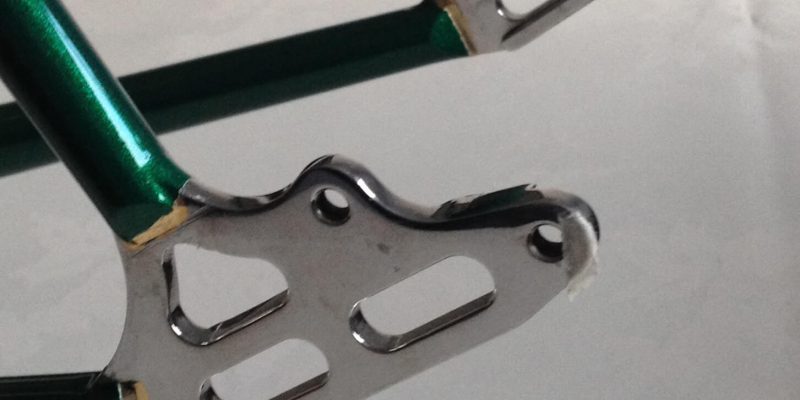
Hi Stephen, I’ve just come across your post whilst researching an unknown bike frame that I have and believe to be a JRJ (Bob Jackson) Merlin. Do you still have your bike shown here? I’d love to compare notes to try and nail down whether my frame is indeed a Merlin as from the pictures yours looks very similar. Cheers, Mart 🙂
Hello Martin,
Perhaps you would like to send me some photos of your frame so I could compare it in detail? Sadly Bob Jackson has ceased trading but it seems possible that Woodrup cycles in Leeds has inherited their brand, and if they have acquired the records, may be able to identify your frame from the number stamped on the bottom bracket. Mine is 4 numbers and was made in 1969. I bought it in 1970. I think it is an International model as it has Nervex Lugs. If you are not familiar with the classic lightweights website here is a link: https://www.classiclightweights.co.uk/classic_builders/jackson-bob-j-r-j/