

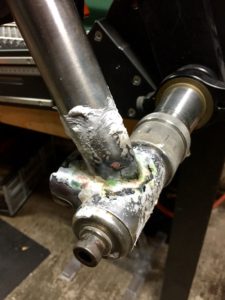
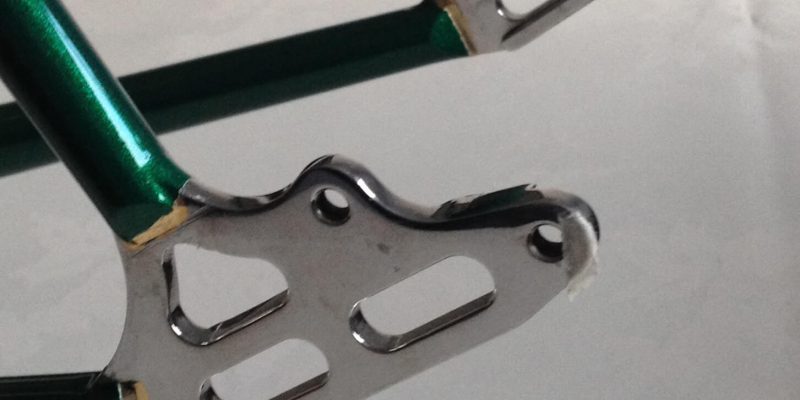
Probably most novice framebuilders use flux and getting it off can be particularly tedious. I admit that I have only used cycle design fluxes for some time, specifically because I find them a lot easier to remove. The only effective method of removal seems to be soaking the fluxed part in water until it loosens sufficiently to be brushed off. Hardened flux that has not been soaked off seems to set like concrete and otherwise requires a lot of heavy filing to remove. The hotter the soaking water the quicker the flux comes off but I have found it takes at least half an hour of initially boiling water to get brass flux to a brushable state. Wire brushing is most effective but can scratch thin stainless steel tubes unacceptably. Having got fed up with boiling several kettles I purchased this 8 litre boiler, which is enough to fill the metal flower tub I use to soak the parts
.
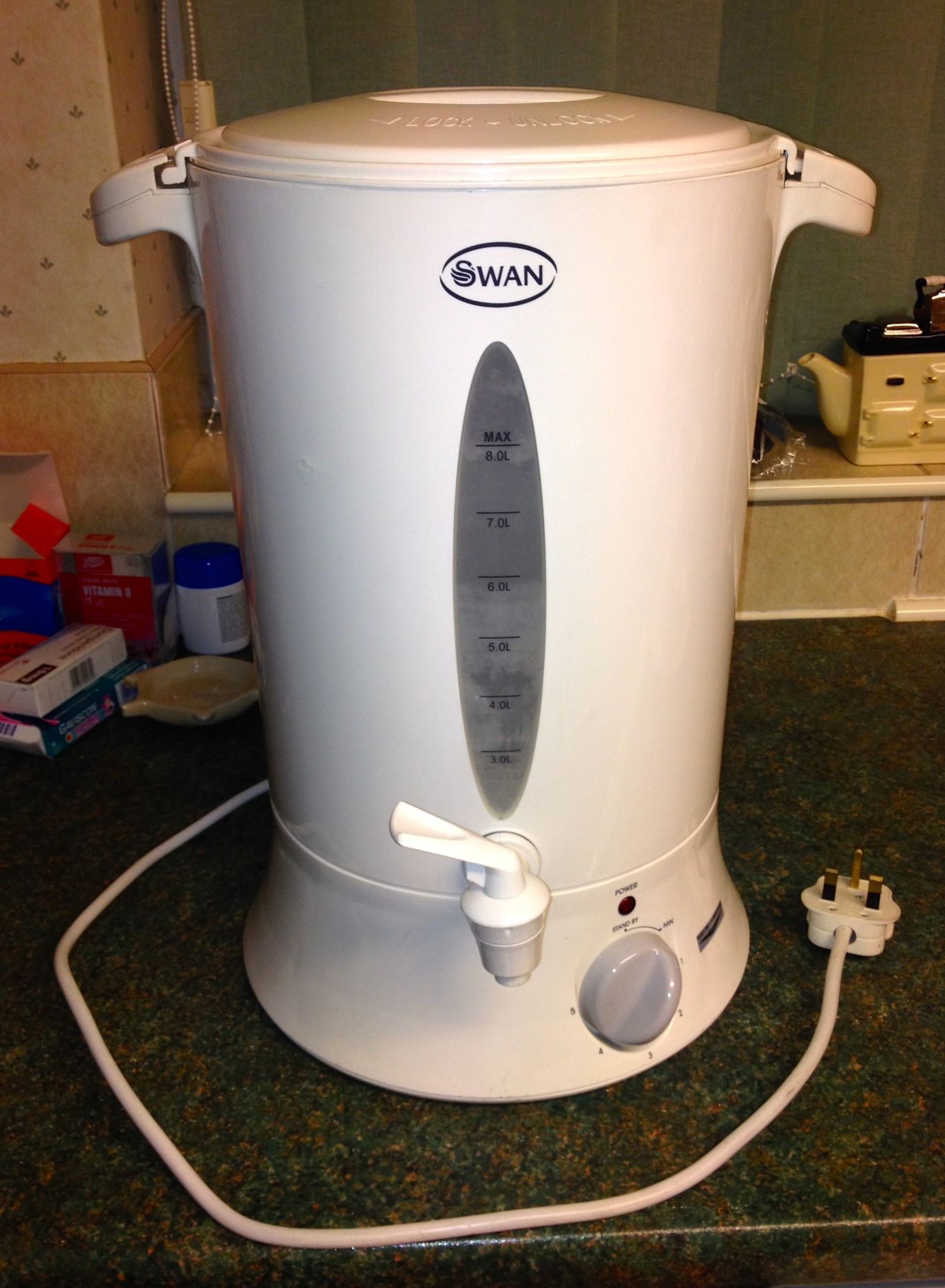
This works quite well for forks and smaller sub assemblies but a whole frame would obviously need a very large amount of hot water, not to mention sizeable container. Rather than soak the frame in sections (also tedious) I experimented with a steam cleaner.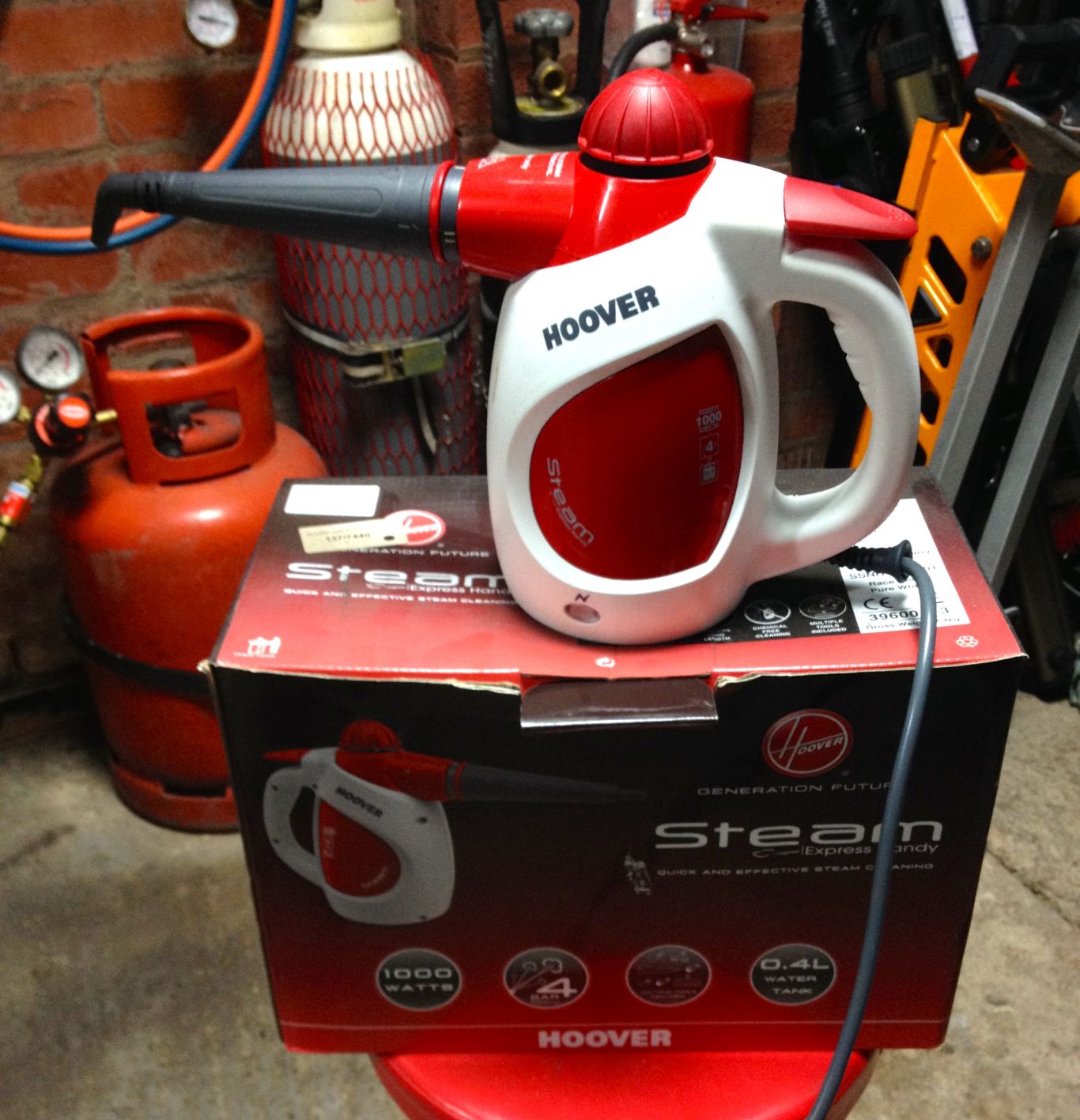
These can be bought quite cheaply. Mine holds about 400ml water and this seems enough to do all the joints I want to clean at a time. It enables me to clean off the flux in my garage as it only leaves a small amount of water on the floor as a result. It also largely avoids getting water inside the frame, which I think is a huge problem with soaking whole frames. I admit I have only used it with the cycle design ‘stainless light’ and ‘low fuming bronze’ fluxes. The stainless light flux is the easier to remove and demonstrated in the video below, in which I only use a scotchbrite pad to avoid scratching the thin stainless tubing:
Gas Flux
If you are lucky (or unlucky!) enough to have a gas fluxer, cleaning up is less of a chore. Unburnt gas flux can be washed off, but there is usually burnt black residue (presumably carbon) further out from the joints. This usually needs to be sanded off and it does not always come off easily. I have also come across people using a revolving powered wire brush, though I have avoided this myself for fear of scratching the frame.
Pickling Solutions
Pickling is the term for soaking metal parts in acidic solutions to remove, in this instance, spent flux. Whilst I have heard of it in frame-building circles I have only once come across an account of someone actually using it for whole frames. This meant soaking the whole frame in said solution, the formula of which was not available.
I am now indebted to an article I read in Model Engineers Workshop, September 2021, issue 307, by Norman Billingham. In this he went through he process in simple terms with a range of different acids that have been used. The article was referring to fluxes used in silver brazing, which is the most widely used in the model engineering world, how they work, as well as the process of removing them. The information would be applicable to other fluxes, which all seem to be formulated around Borax or Boric acid.
There is a long list of acids which have been used for pickling, including weak organic acids such as Citric acid and Acetic acid. Strong acids have also been used (diluted of course) viz. Nitric, Sulphuric, Hydrochloric and Sulfamic acid. Additionally some additives have been thrown in the mix.
I gloss over these because I have absolutely no intention of using any of them. Apart from the fact you now need a licence to obtain some strong acids, and they are hazardous in use, I feel that the problems of filling up your frame with acid, unless you are able to seal all access to the insides of the tubes, makes them extremely undesirable. Some of them are capable of continuing to eat away at the metal and I think it is very likely rusting will ensue.
Though aggressive and lazy methods of flux removal are attractive, I shall be sticking to warm and hot water and steam, using the method I think has the least potential to get inside the frame at the time.

5 thoughts on “Flux Removal – Updated”
What an inspired idea. I think I’ll go down that route as well. Thank you.
I’m now the proud owner of a Hoover hand held steam cleaner. What a top tip. One tankful removed all the flux from the frame.
Hi, are you still using this method to remove flux?
Actually,of late I have mostly been brazing in sections and de-fluxing a joint or two at a time, making it possible to clean over the sink with a kettle of boiled water (serious burn hazard so not recommended) and the hot tap, which is probably adequate with cycle design fluxes, especially silver flux. Also with brass I mostly use a gas fluxer, which doesn’t leave a lot of residue. If I were doing a lot of joints at once with paste flux I would still use the steamer as soaking a whole frame in liquid is not desirable from my point of view.
Thanks for the reply. Unfortunately I don’t have running hot water in my workshop and boiling the jug gets a bit tedious. Will look at getting a steam cleaner.
I would love a gas fluxer but it’s a pretty big investment for a hobbyist. Well over $2000 down here in NZ. Maybe one day.
Thanks again.