
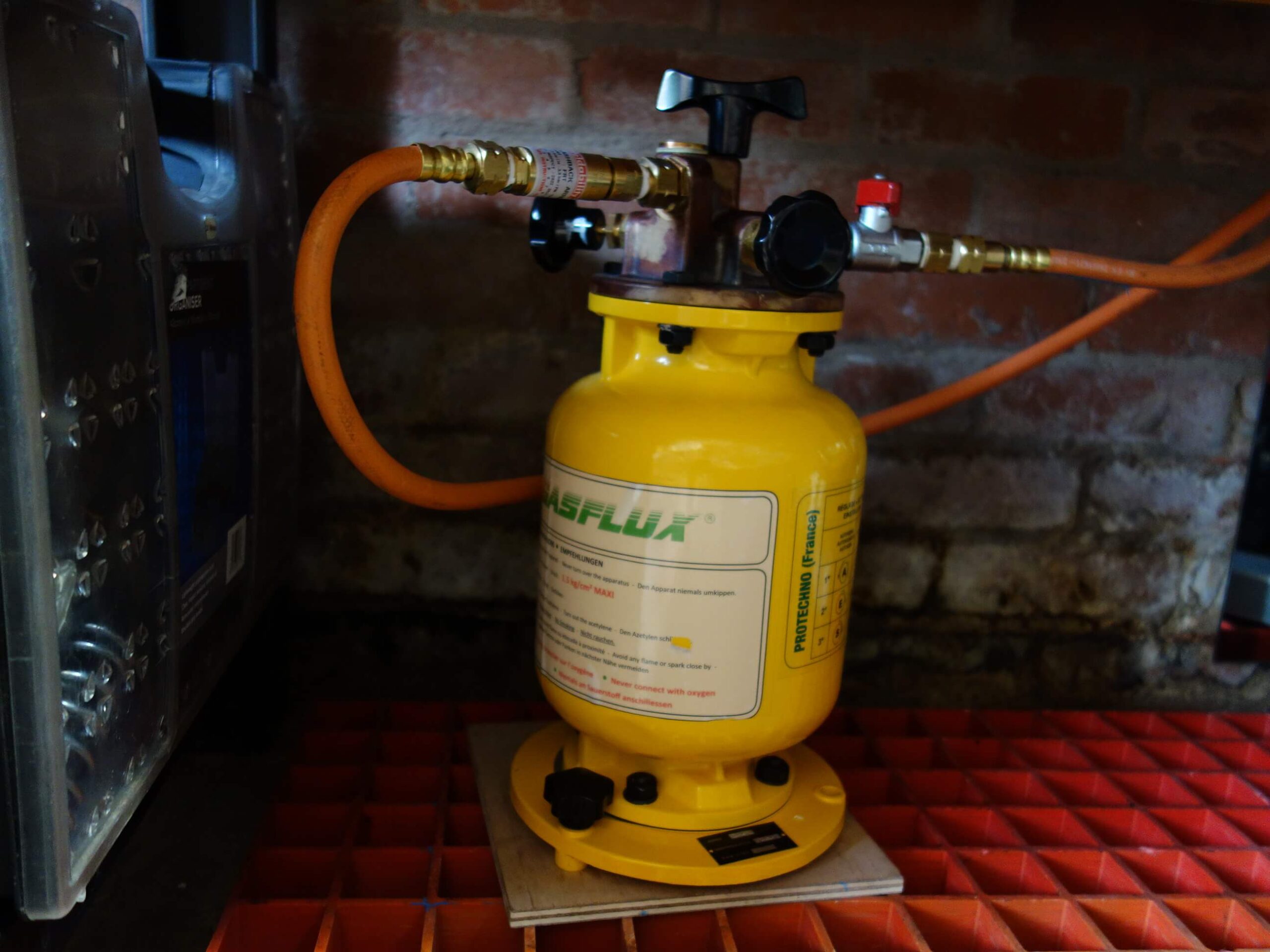
I have been using a Model W gasfluxer for brazing for the last few years. An obsolete model from Plasmatech, but still available reconditioned. Whilst it worked, mine did have some annoying deficiencies, so in the end I decided to try a newer model. I chose the alternative Autofluxer M3, again from Plasmatech, which costs £750 + vat, quite a sizeable sum. In fact the only other fluxer I have seen for sale is the American model 69 as sold by Sif and other suppliers. Whilst this was out of stock with all major suppliers when I looked, it is now available for about £2,300 + vat. The model 69, like the Model W, comes with an attached top up reserve tank, whereas the Autofluxer M3 only has the main tank, which holds approx 2.6 litres of gas flux. A reserve tank is made, but not advertised for sale by Plasmatech.
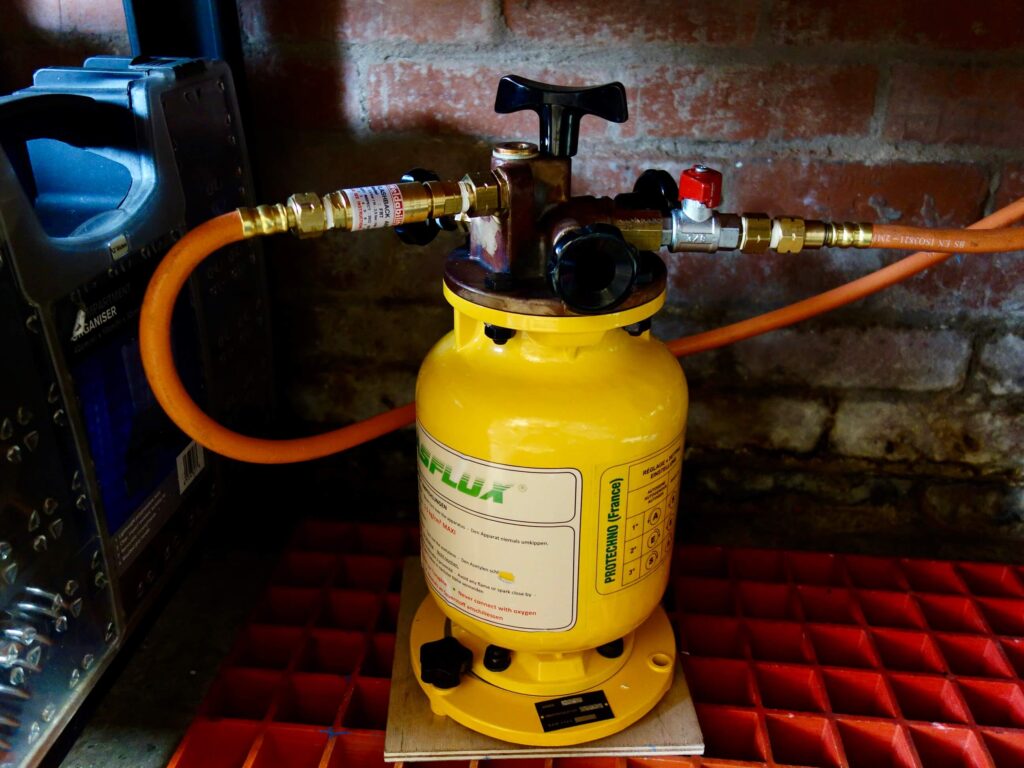
Personally, because of my low use, I did not want a reserve tank, which is just an added encumbrance and I did not come close to using up 5 litres of gas flux over several years. The Autofluxer M3 is in fact made in France. In use I have found it much more satisfactory than my old fluxer. It has screw valves with big handles rather than the small sticky saunders valves, and is lighter being made of cast aluminium. Max pressure setting is 1.5 bar ( 21.75 psi). I have been using the same settings as with my previous fluxer i.e. 5-6 psi for propane, coupled with the 8 psi I use for oxygen. It has all the same features of other fluxers, viz. the ability to run with fuel gas (acetylene, natural gas or propane) and the ability to by-pass the flux reservoir for switching to paste flux for silver brazing.
In use it seems to add the flux well enough when used with propane, as indicated by the green flame and my limited use of it in practice so far.
The Downside!
* The instruction manual is in french, though plasmatech offers the english version online.
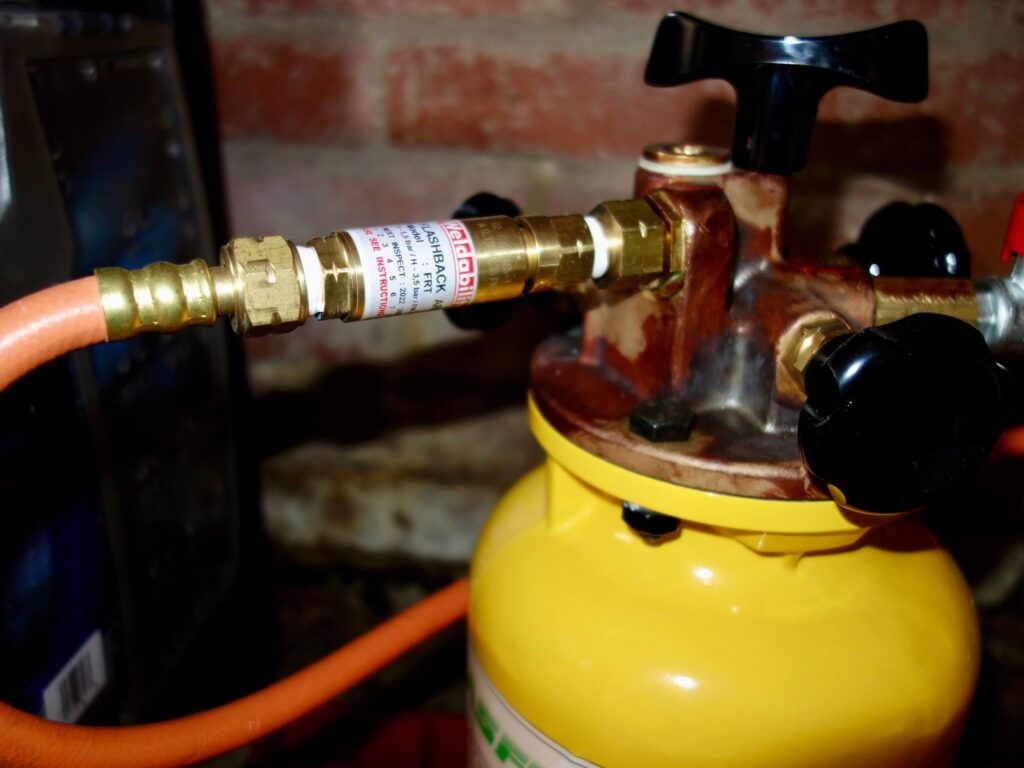
*There is no recommendation in the instructions to place a flashback arrestor on the outflow connection, as there was with the Model W. I did so anyway to supplement the one on the cylinder.
*The instructions recommend the use of a gas dryer, due to the perception that there will be moisture in the gas used and this will degrade the gas flux. There was no similar recommendation with the Model W. I have been unable to find a suitable gas dryer, the only ones I have seen being suitable for a small chemical factory. I therefore will not be using one.
*The instructions state the capacity is approximately 2.6 litres, so you need to measure out the flux first and add it with a funnel, as there is no indicator for the fill level and no viewing window. (the viewing window on the Model W was a pain, as it was forever leaking).
* The biggest issue for me is the fact that the hose connectors are non-standard. Despite checking with Plasmatech before ordering that the connectors would be standard 3/8 BSP, and being reassured they were, they are NOT. Despite this being a worldwide standard outside the USA the connections on the fluxer are M16 x 1.5 mm. I do not think Plasmatech were aware of this. The French factory response was that the customer has to change the connectors as everyone asks for different ones. This begs the question as to whether I am the customer, or Plasmatech. There are two hose connectors supplied with the fluxer to match the 16 mm fittings, but these have to be crimped onto your hose, so you would need crimps and a crimping tool, which are available from welding equipment suppliers. Also you could not fit a flashback arrestor to a 16mm thread. Personally I do not feel happy with crimping my own hoses, but others may feel differently.
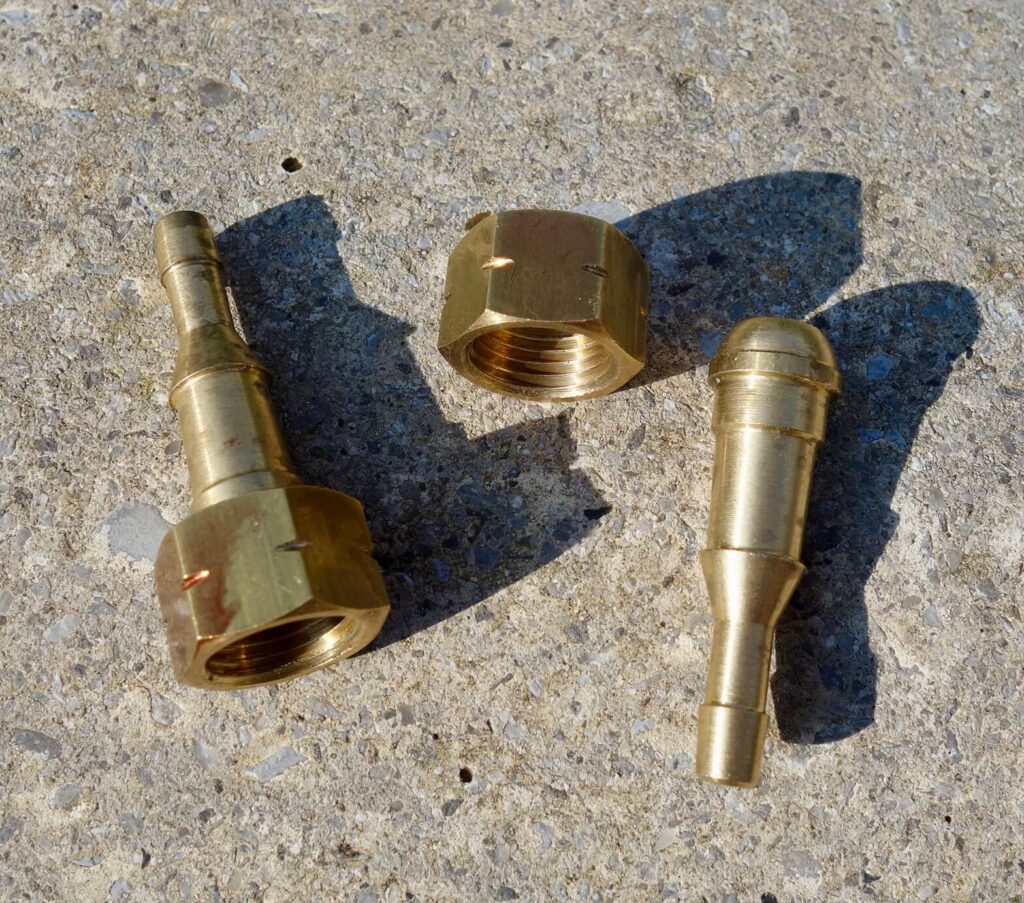
My solution to this problem was to change the connectors. Initial attempts to extract the connector block was abandoned as they were clearly not designed to be screwed out. I therefore had a go at making some adaptors out of brass, with a female 16×1.5mm end to attach to the fluxer and a 3/8 bsp male end for the hose. This should have been cheap enough to make on a lathe, but mine is metric and would not adapt to cut the 3/8 bsp thread (note both are LEFT hand) so I had to shell out for an expensive 3/8 BSP left hand die.

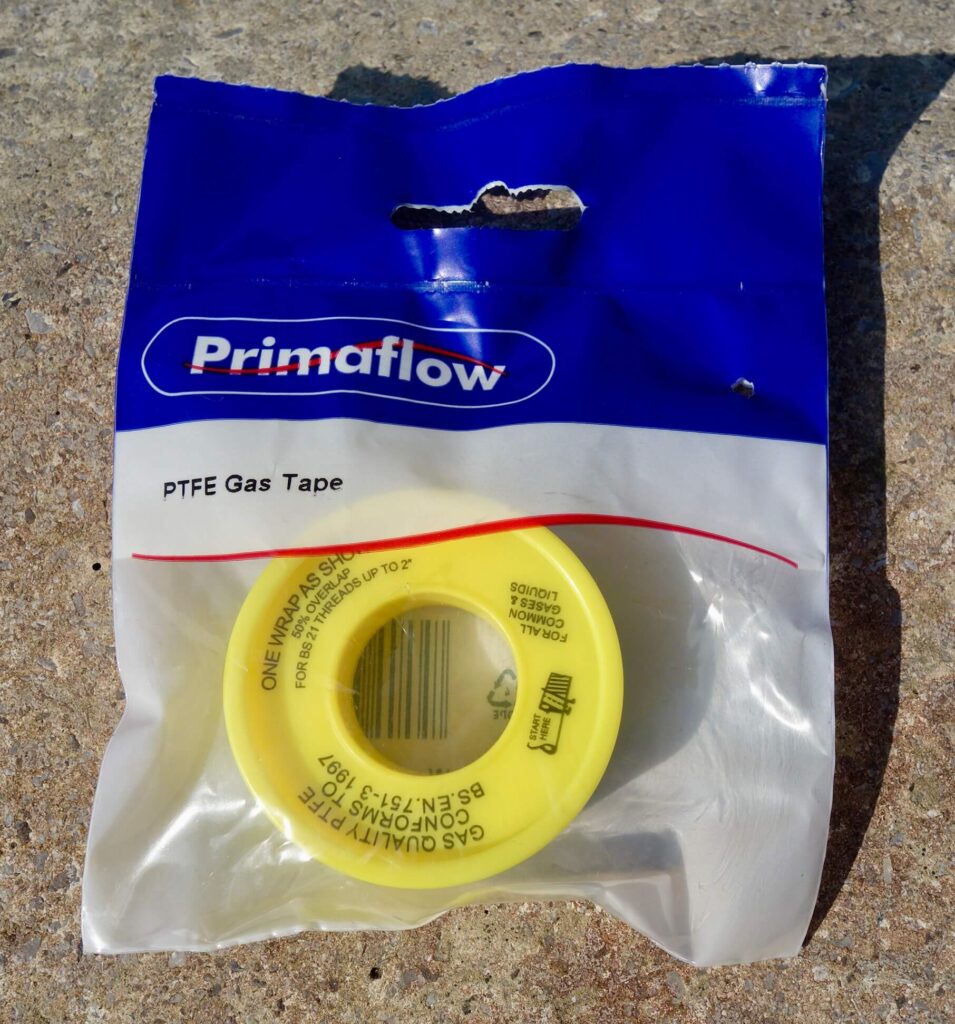
I was relieved when I was able to get a gas seal with these adapters which you can see in the photograph below. I added PTFE tape to enhance this. You CANNOT use standard PTFE tape. Gas safe tape is usually coloured yellow. This is not safe for oxygen. Oxygen safe PTFE tape is usually coloured green.

An Update on a leaking problem 16/6/24
After using the fluxer several times I found leaking from two of the three valves controlling the fluxer flow. The instructions specify not to over tighten the valves, but the threads on the valves themselves are quite stiff, which makes judging the tightness difficult. In the event I must have been over tightening. As you can see from the pictures below the valves are easy enough to remove. Remember to de-pressurise the fluxer first. There is a small brass washer either side of the white nylon washer and on one valve one was snapped in half and the other cracked on one side (which was difficult to see). On the other valve both were cracked. These washers were about 0.8 – 0.9 mm thick and about 13 mm diameter (from memory) and were a non-standard size. I did not attempt to source replacements from Plasmatech or the French manufacturer as it was a bank holiday weekend! I therefore managed to make some replacements from a brass rod I had and these seemed to have worked fine. The thickness is not critical, probably better on the thicker side
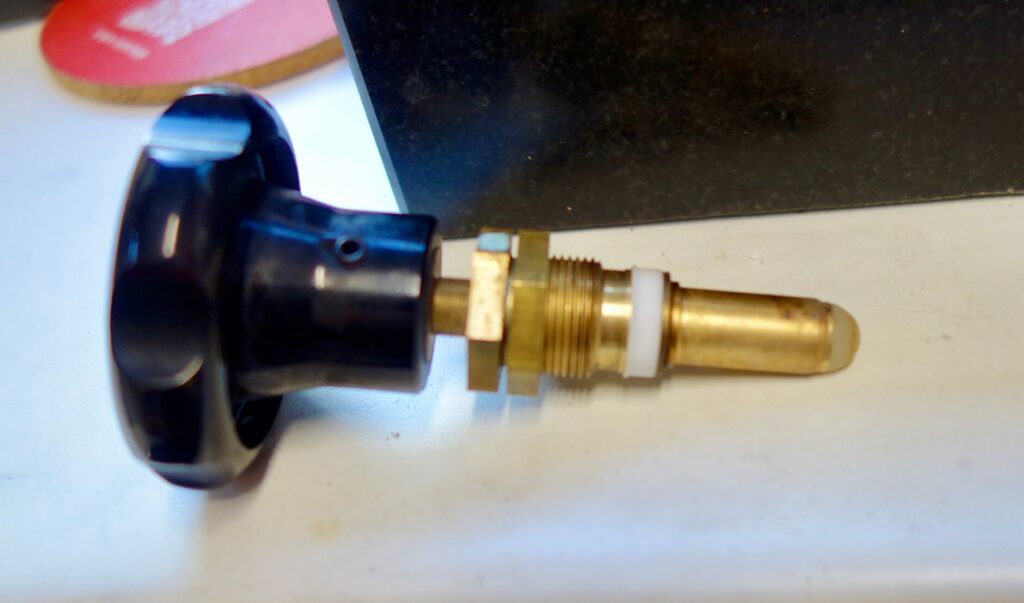
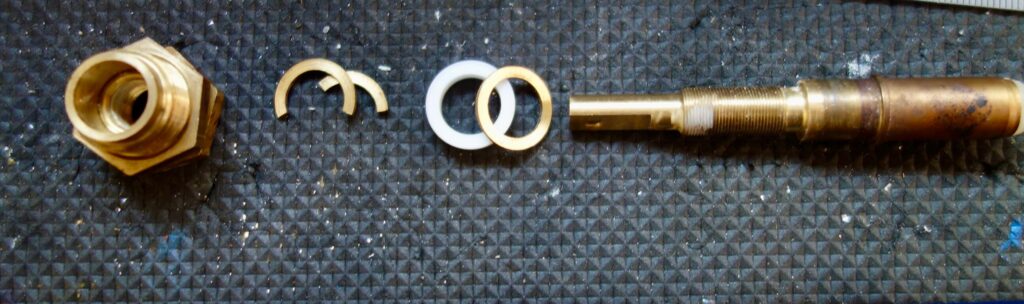
I have since purchased some gas safe grease to lubricate the threads, which I hope will give a better feel to the closure. I really need to remove the taps again to lubricate the threads properly and am not sure yet how the grease will stand up to the flux itself.
https://www.rocol.com/products/m23660-gas-tap-lubricant


7 thoughts on “Autofluxer M3 – Gasfluxer – UPDATED”
Hi Stephen, I’m from Germany, and in my free time, I build bicycle frames. Primarily, I’ve been creating “fillet-brazed” joints using regular fluxpaste from the cycle design company. However, I’ve grown tired of the fumes, subsequent cleaning, and rinsing. Not to mention the significantly more appealing appearance of fillets made with the help of a gas fluxer. So, I’m looking to acquire a gas fluxer now. During my research, I came across the Model 3 and also the Model W from Plasmatech, along with your really informative article on the subject. Thanks a lot for that.
My questions at this point: Are you still using the M3, and are you still as satisfied as in the beginning? Do you have any experience with how the M3 performs with acetylene? My torch runs on acetylene. Or, after over a year of use, would you advise against the purchase? Thanks a lot in advance and warm regards.
Lucas
+4917634127797
Oh, these two questions came to mind as well: What flux do you use, and where do you source it? Do you have issues with moisture in the flux? In the user manual, it mentions that especially when using it without a reserve tank, over time, moisture tends to accumulate in the tank itself, rendering the flux ineffective.
Hello Lucas,
Thank you for getting in touch. I have only built two frames so far using the M3 Gas fluxer and as I think I said in my article I have found it better than the Type W. I understand a gas dryer is not necessary when using acetylene. I have no reason to believe the M3 will not be effective with acetylene as all the fluxers I have encountered were essentially designed for acetylene. As for a gas dryer, I have never used one, or found a problem with the fluxers in that respect, despite using propane. I have, in any case, not been able to find a dryer suitable for a small set up like mine. I have not come across anyone else who uses propane using a gas dryer either, though most of them probably use paste flux. I only make relatively small numbers of frames, and the 5 Litres of gas flux I have to buy lasts for ever! In fact I decided to dispose of the remaining amount of my last lot when I changed fluxers ” In Case” it may have deteriorated. I do not use a reserve tank also for the same reason. Even if I built a lot of frames I probably would not bother with the reserve tank.
I get my gas flux from Plasmatech also, as they are the cheapest supplier in the UK. The only other supplier I am aware of is weldability-sif. I assume there will be other suppliers in Germany? Please get back to me if you think I can be of any further help.
Hi Stephen , Great post thank you very much , those informations are really helpful ! I have two questions : Did you experienced a lack of efficiency of the flux due to storage in the tank because of moisture ? The W3 is manufactured in France , do you have a name or adress of the manufacturer annoted on documents or sticker ? Thank you – mark
Hello Mark,
I haven’t knowingly had any issues with lack of efficiency of the fluxer. Just used it this week and now been running it for over two years with the same flux. I have heard comments before about water contamination when using propane but it is not something I have been aware of. You are supposed to be able to reduce the amount of flux by opening valve A whilst fluxing, but I have always used it set at maximum fluxing.
I have just had a problem with two leaking taps, which proved to be due to cracked brass washers. I will post an update on this soon, but it was probably my fault by overtightening the valves.
The manufacturer is:LUCAS MILHAUPT, Riberac, France. http://www.lucasmilhaupt.com
Best Wishes,
Stephen
Hello there is anyone in here have a knowledge about its inner volume of the flux toubes but total volume i am nottalking about the flux volume
Hello Erdol, I am not sure, but I think you are asking what is the total volume of the flux chamber. This is not specified, but based on the dimensions my best guess is 5 litres. It holds 2.6 litres of flux